Written and reviewed by A Pomsky Editorial Team. Originally published 2026-07-26; substantively reviewed July 26, 2026.
Training boundary: Use humane, reward-based methods and protect safety with management. Pain, panic, aggression, a bite history, or serious handling risk requires a veterinarian or qualified behavior professional. Read the editorial policy.
Direct answer: Before a storm, prepare a familiar interior retreat, secure exits, reduce flashes and abrupt sound where practical, and move there at the earliest stress cues. During real thunder, preserve safe choices and avoid forced exposure. Practice recordings only at low intensity between events, and seek veterinary or qualified behavior help for severe or worsening fear.
A thunderstorm plan should reduce exposure and preserve choice before the first thunder arrives. Prepare a quiet retreat, close visual and sound pathways where practical, keep identification current, and observe the Pomsky’s individual threshold. During a storm, management takes priority over training; gradual sound work belongs between real events.
Map the Dog's Storm Response
List the earliest observable changes: scanning windows, following people, lowered posture, inability to settle, panting, trembling, hiding, vocalizing, refusing food, or trying to escape. Note whether wind, pressure changes, rain, flashes, or distant thunder appear first. Do not wait for the most dramatic behavior before responding.
Use this record to identify when the Pomsky can still choose food, movement, and rest. Fear is not defiance. Punishing barking, hiding, or seeking contact can add another threat to an already difficult event. Sudden or worsening sensitivity may also warrant veterinary assessment.
Prepare a Quiet Retreat in Advance
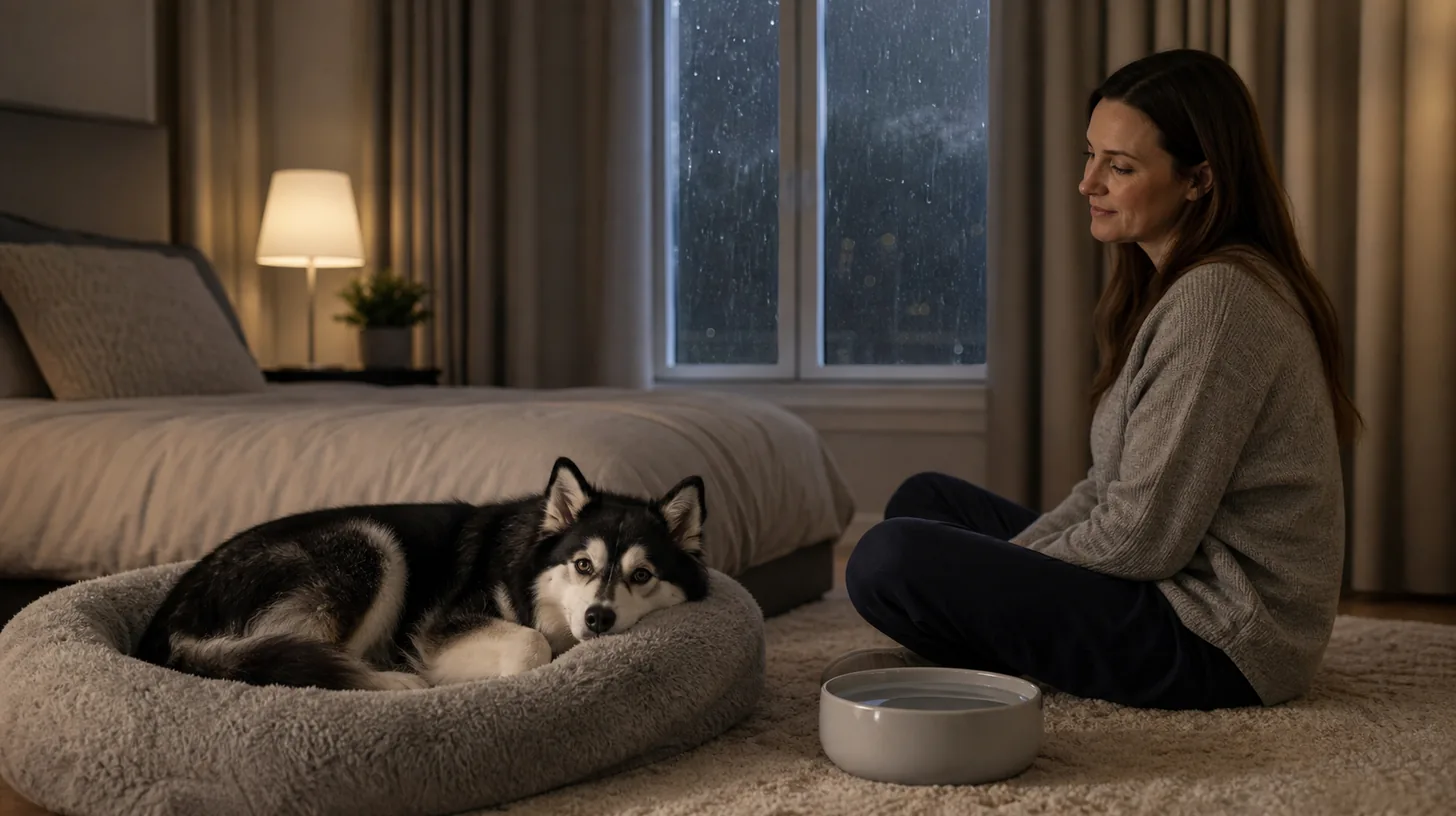
Choose an interior area the dog already uses voluntarily. Provide familiar bedding, water, safe traction, and access that does not require crossing a slippery floor or stair. Close curtains or blinds, and use ordinary household sound such as a fan or calm audio at a safe volume to soften abrupt noise.
Do not lock the Pomsky into an unfamiliar closet, crate, or small room during the first storm. Confinement is appropriate only when the dog is already comfortable there and cannot injure itself. Keep doors and windows secured because frightened dogs may bolt through routes they normally ignore.
Protect Identification and Exit Safety
Check the collar or harness fit, visible tag, and microchip contact details before storm season. Toilet breaks should use a leash and secure exit, even in a fenced yard. Inspect gates after strong wind and avoid retractable leads near traffic or damaged fencing.
Plan who handles the dog if power fails, a warning requires sheltering, or the household must evacuate. Keep a light, leash, carrier or other safe transport equipment, medications, and current records accessible. The storm coping plan should connect to the broader emergency plan without duplicating the full evacuation checklist.
Respond Early During a Real Storm
Move to the prepared area when early weather cues appear rather than waiting for panic. Offer access to the retreat and remain predictable. If the Pomsky seeks quiet contact, provide it without restraining the dog. If the dog prefers distance, protect that space from children, visitors, and other pets.
Food can be offered if the dog can eat comfortably, but refusal is information, not disobedience. Do not repeatedly present treats near a frightening window or drag the dog from hiding. Reduce demands, prevent escape, and allow the animal to choose among safe resting positions.
Avoid Flooding and Forced Exposure
Playing loud storm recordings until the dog stops reacting is not a safe desensitization plan. A dog may freeze, exhaust itself, or become more sensitive. Real storms also include vibration, light, atmospheric changes, and unpredictability that a recording cannot reproduce.
Do not carry the Pomsky outdoors to “show there is nothing wrong,” hold the dog beside a window, or require obedience drills during peak fear. Training should remain below the point where the dog loses the ability to recover. Management during an uncontrolled event is a valid and necessary intervention.
Practice Sound at Low Intensity Between Storms
On a calm day, play a brief storm sound at a level the Pomsky notices without changing posture, scanning, or refusing food. Pair that low-intensity sound with a valued activity, then stop. Leave enough time for ordinary behavior before another repetition.
Increase only one variable and use small steps. If the dog becomes vigilant, lower the volume or increase distance from the speaker. Recordings should never be used during rest without active observation. They are a controlled practice cue, not a way to reproduce a severe storm.
Teach Voluntary Retreat Skills
Reward the Pomsky for entering and resting in the quiet area when weather is calm. Add a simple cue only after the movement is predictable. Practice with curtains closing, a fan starting, and household members moving to their own storm positions.
Keep a release cue and allow the dog to leave when the environment is safe. A retreat should not become a trap. If multiple animals use the space, provide separated stations and prevent crowding around food, beds, or doorways. Train each animal individually before expecting a shared routine.
Evaluate Products Conservatively
Pressure garments, sound devices, covered crates, supplements, and other products are not universally suitable. Fit, heat, mobility, ingestion risk, and the dog’s previous response matter. Introduce any physical item during calm weather and remove it if the Pomsky avoids movement, pants excessively, struggles, or becomes more distressed.
Do not combine unapproved sedatives, supplements, or human medications. A product review cannot diagnose noise fear or determine medical suitability. Discuss medications and health-related options with a veterinarian who knows the dog, especially before predictable storm seasons.
Keep a Storm and Recovery Log
Record forecast timing, earliest cue, retreat use, food acceptance, peak behavior, escape attempts, and time to resume normal activity. Include what management was in place. Improvement may look like earlier voluntary retreat, lower peak intensity, or faster recovery rather than complete absence of fear.
Review patterns across several events. Storm intensity varies, so compare events cautiously. A difficult severe storm does not automatically erase progress, and a mild storm does not prove the problem is resolved. Share concise observations or selected private video with a veterinarian or behavior professional when needed.
Escalate Severe or Worsening Fear
Seek veterinary help when fear is intense, new, worsening, associated with self-injury, prolonged inability to recover, destructive escape attempts, or other health changes. A qualified reward-based behavior professional can coordinate low-intensity conditioning and household management.
Emergency care takes priority if the Pomsky is injured, overheated, collapses, or ingests a hazardous item during an escape attempt. A thunderstorm plan cannot guarantee calm. Its purpose is to reduce preventable exposure, protect exits, preserve safe choices, and create useful evidence for individualized professional care.
Review the retreat before each storm season and replace damaged barriers or expired emergency supplies.
Sources reviewed
Each source is used only for the claim scopes listed below. None establishes a guaranteed Pomsky outcome or replaces individual professional assessment.
- Cornell University College of Veterinary Medicine: Anxious Behavior: How to Help Your Dog Cope With Unsettling Situations - Supports: anxiety signs; separation-related vocalization; gradual desensitization; reward-based professional help. Limit: Howling alone does not diagnose separation anxiety; sudden or severe distress needs veterinary assessment.
- American Veterinary Society of Animal Behavior: Humane Dog Training Position Statement - Supports: reward-based training; aversive-method risk; behavior change principles. Limit: Does not guarantee outcomes for an individual dog.