Written and reviewed by A Pomsky Editorial Team. Originally published 2026-07-26; substantively reviewed July 26, 2026.
Training boundary: Use humane, reward-based methods and protect safety with management. Pain, panic, aggression, a bite history, or serious handling risk requires a veterinarian or qualified behavior professional. Read the editorial policy.
Direct answer: Ask the puppy's veterinarian which controlled environments and known animal contacts fit current preventive-care status and local disease risk. Use brief positive exposures with distance, clean transport, hygiene, rest, and an easy retreat. Avoid unknown dogs, contaminated surfaces, forced interaction, and any universal claim about a safe vaccination date.
Early socialization and infection prevention should be coordinated, not treated as competing absolutes. A Pomsky puppy benefits from carefully selected positive exposure while a veterinarian assesses vaccination status and current local disease risk. There is no universal date when every location becomes safe, and socialization should never mean uncontrolled contact or overwhelming the puppy.
Begin With the Puppy’s Veterinarian
Ask the veterinarian to review age, health, vaccine history, parasite prevention, household exposure, local disease patterns, and planned environments. Bring records from the breeder, shelter, or previous clinic. Do not assume a document is complete or that one injection creates immediate universal protection.
Request practical categories: suitable controlled settings now, environments to avoid, contact rules for known healthy animals, cleaning and transport precautions, and the date for reassessment. Follow the individual care plan rather than copying another puppy's calendar.
Define Socialization Correctly
Socialization means building safe, positive familiarity with the world: different people, sounds, surfaces, handling, transport, household activity, and appropriate animals. It is not a quota of greetings, a crowded dog park visit, or an endurance test.
The puppy should be able to observe at a comfortable distance, take reinforcement, retreat, rest, and recover. A short neutral exposure can be useful. More intensity is not automatically better.
Create a Risk-Controlled Exposure List
Divide possible experiences into home-based, carried or contained observation, controlled private locations, veterinary-approved classes, and higher-risk public environments. Examples at home can include hats, mobility aids, household sounds at low volume, different floor textures, gentle handling, and visitors following hygiene rules.
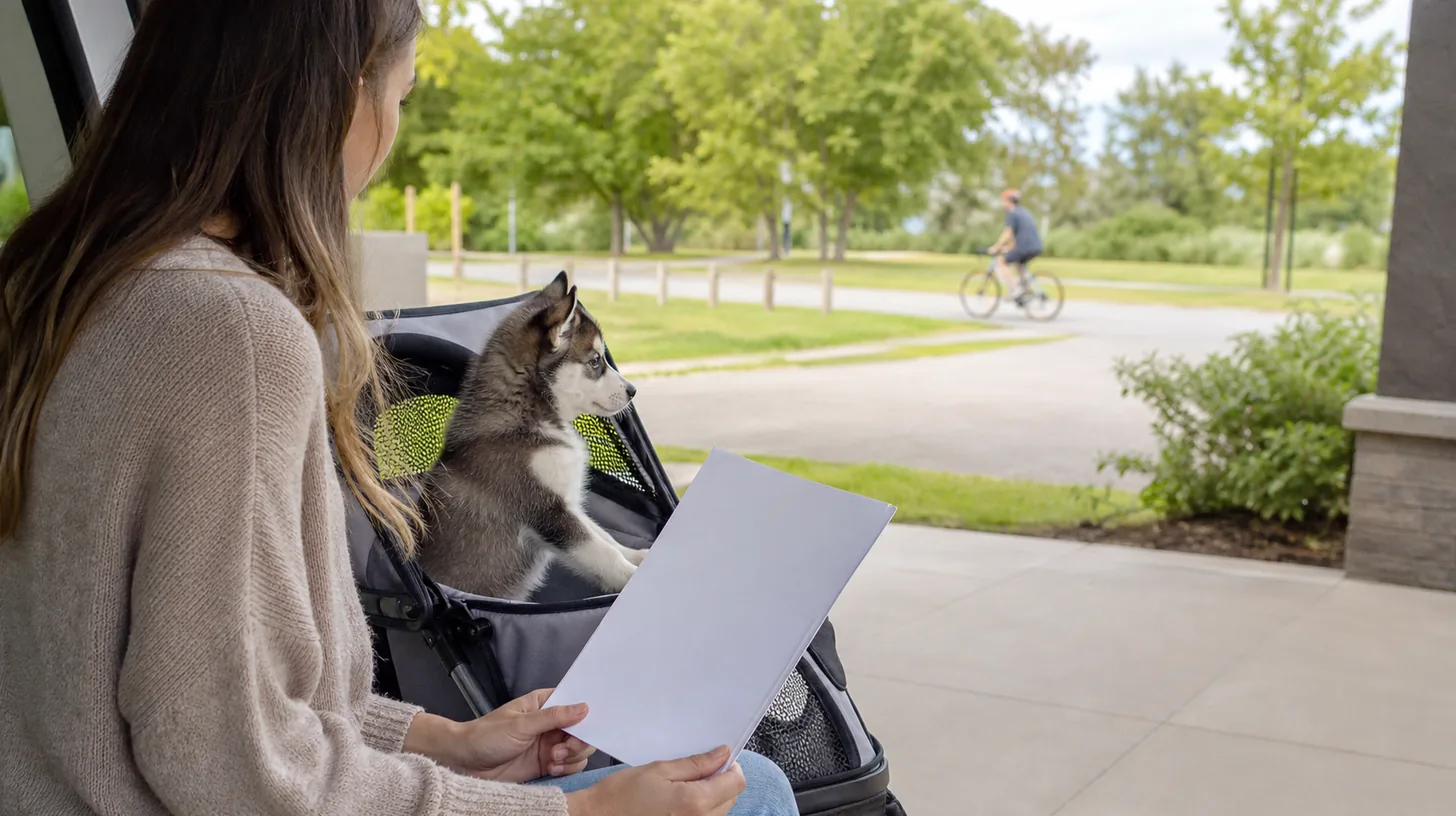
For outside observation, use a clean carrier, stroller designed for safe animal transport, vehicle, blanket, or private yard only when appropriate for the puppy and veterinary plan. Prevent contact with unknown feces, communal water, uncontrolled dogs, and contaminated surfaces.
Evaluate Puppy Class Options
Ask the veterinarian whether a specific puppy class is suitable. Ask the class provider about vaccine and illness policies, cleaning, group size, age range, supervision, reward-based methods, rest breaks, and how fearful puppies are protected from forced interaction.
Observe a class if permitted. Puppies should not be flooded, physically corrected, or pushed into play. The provider should have a plan for illness reports and environmental sanitation. Marketing alone does not establish safety or humane instruction.
Choose Animal Contacts Carefully
Any dog contact should involve an appropriate known dog, responsible handler, suitable setting, and veterinary-approved health context. Begin with distance and parallel movement when possible. Protect the puppy from chasing, pinning, crowding, and repeated correction by another dog.
Do not use unknown dogs to “teach manners.” Cats and other household animals need species-appropriate separation, escape routes, and gradual introductions. The goal is calm safe exposure, not immediate friendship.
Read the Puppy’s Response
Look for loose movement, voluntary approach, ability to eat, curiosity, play invitations, and return to ordinary behavior. Increase distance or end the session when the puppy freezes, hides, struggles to escape, refuses familiar food, vocalizes persistently, or cannot settle.
Do not restrain the puppy close to a feared person or object. Fear signals are information. Lower intensity on the next exposure and seek qualified help when fear is severe, broadening, or difficult to manage.
Keep Sessions Brief and Specific
Introduce one main feature at a time. A two-minute observation of bicycles at a quiet distance is easier to evaluate than a busy market containing children, carts, dogs, music, and traffic. End while the puppy remains comfortable.
Schedule sleep and ordinary routine around exposures. Fatigue, hunger, illness, and several novel events in one day can change the response. Socialization does not require constant stimulation.
Protect Transport and Hygiene
Use a clean secure carrier or restraint appropriate to the trip. Prevent the puppy from moving loose in a vehicle. Bring a clean mat, water, waste supplies, and hand-cleaning materials as advised. Avoid placing the puppy on clinic or public floors unless the veterinary team directs it.
Ask visitors to wash hands and avoid contact when they or their animals are ill. Clean equipment under product directions and keep outdoor footwear away from the puppy's resting and feeding area when the care plan calls for it.
Record Exposures Without Chasing Numbers
Write the date, setting, distance, duration, people or animals present, puppy response, recovery, and next easier step. A quality record describes what the puppy experienced and how it responded; it does not celebrate a large count.
Review patterns with the veterinarian and qualified reward-based trainer. Repeated fear, sudden behavior change, or loss of previously comfortable responses may require health and behavior assessment.
Update the Plan After Each Veterinary Review
Vaccination status and local risk change over time. At each relevant appointment, ask which environments can be added, which precautions remain, and what signs require delay. Keep records current and verify class or travel requirements separately.
Do not interpret this checklist as a vaccine schedule or guarantee against disease. The veterinarian provides medical timing and risk advice. The caregiver controls exposure quality and avoids preventable contact.
Use Professional Help When Needed
Contact the veterinarian promptly for illness, appetite change, vomiting, diarrhea, coughing, marked lethargy, or exposure concerns. Follow clinic instructions about arrival and isolation so other animals are protected.
Seek a qualified reward-based professional for persistent fear, handling difficulty, or unsafe interaction. The finished coordination plan combines current veterinary advice, controlled positive experiences, close observation, hygiene, rest, and frequent adjustment. It protects both developmental opportunity and individual health without pretending that one rule fits every Pomsky puppy.
Prepare a One-Page Handoff
Summarize the veterinarian-approved environment categories, current restrictions, known healthy animal contacts, hygiene routine, transport setup, puppy comfort signals, stop signals, and next review date. Give this page to every adult who handles the puppy. Do not delegate medical decisions to a walker, visitor, child, or classmate.
When another caregiver completes an exposure, ask for setting, distance, duration, surfaces, animals present, puppy response, and any possible illness contact. Add the information to the same record. This prevents duplicate high-intensity experiences and lets the veterinarian assess an exposure concern with a clear timeline instead of incomplete recollection.
Sources reviewed
Each source is used only for the claim scopes listed below. None establishes a guaranteed Pomsky outcome or replaces individual professional assessment.
- American Veterinary Society of Animal Behavior: Puppy Socialization Position Statement - Supports: puppy socialization window; safe exposure; puppy classes. Limit: Vaccination and exposure decisions still require the puppy's veterinarian.
- American Animal Hospital Association: AAHA-AVMA Canine Preventive Healthcare Guidelines - Supports: preventive exams; individual risk assessment; parasite and vaccination planning. Limit: The veterinarian sets the schedule for the individual dog and location.