Written and reviewed by A Pomsky Editorial Team. Originally published 2026-07-26; substantively reviewed July 26, 2026.
Training boundary: Use humane, reward-based methods and protect safety with management. Pain, panic, aggression, a bite history, or serious handling risk requires a veterinarian or qualified behavior professional. Read the editorial policy.
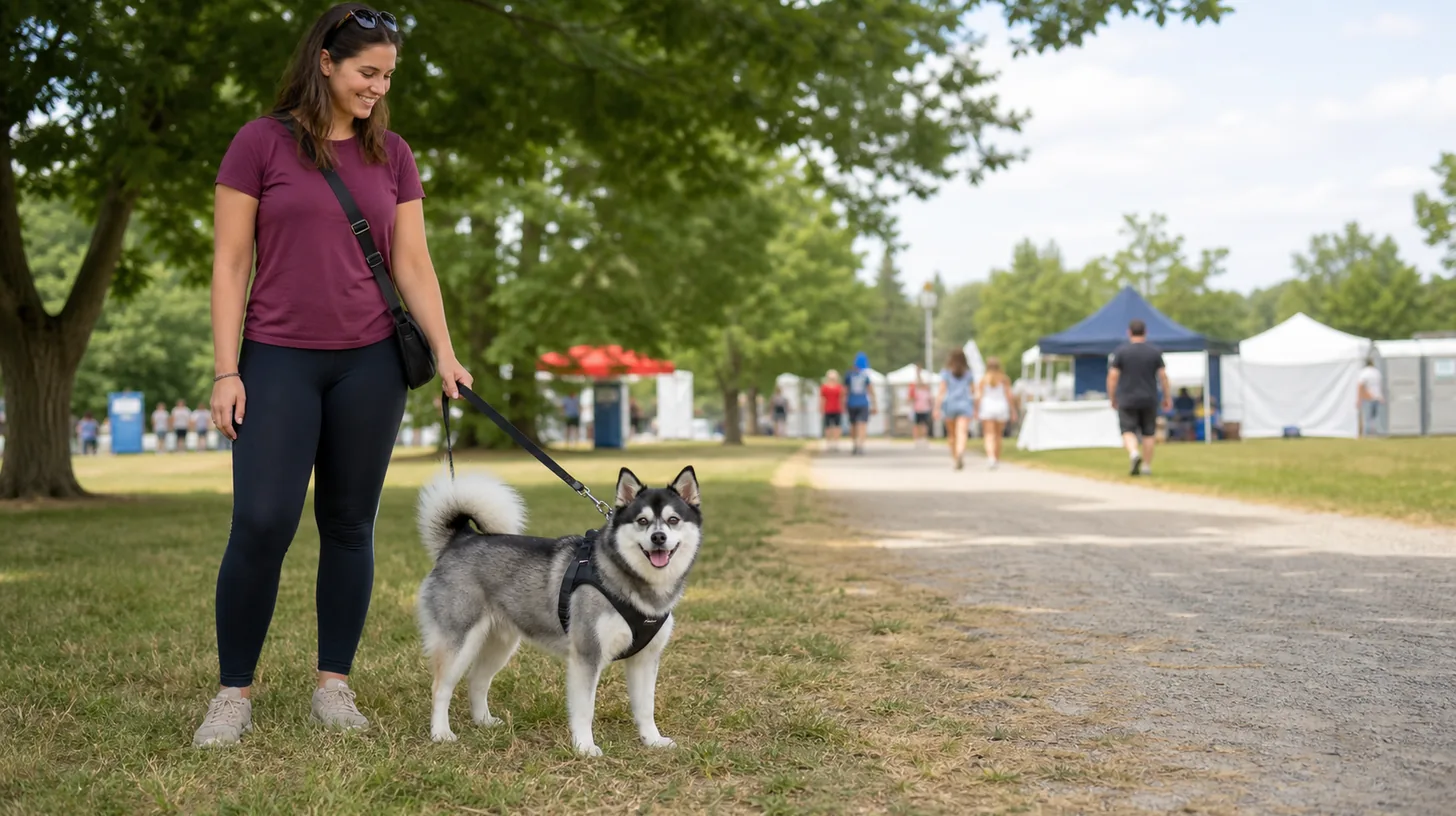
Direct answer: Verify the festival's current animal rules, weather, surface, sound and expected crowd before deciding to go. Inspect identification and restraint, enter by an edge route with multiple exits, and assign one handler whose only job is the Pomsky. Avoid dense queues, stages, food waste and forced greetings; pause in quiet space to assess recovery; and leave as soon as spacing, control, comfort or a reliable exit begins to deteriorate.
An outdoor festival changes continuously: entrances fill, stages start, food waste accumulates, queues block paths and a quiet edge can become a dense crossing. A Pomsky should attend only when current rules, conditions, equipment, handler capacity and exits support a short reversible visit. The plan centers on edge routes, repeated recovery checks and leaving before the crowd removes choice.
Verify Rules Schedule and Conditions
Check official animal access, restricted areas, expected attendance, sound events, weather, surface and closing changes before departure.
Keep the sequence repeatable across caregivers. Say what is being checked, complete it, and return equipment and people to neutral before continuing. In this page's context, success means one short reversible festival visit with verified permission, suitable conditions, controlled edge route, one dog handler, quiet recovery points and early exit; it does not mean proving that a known risk can be tolerated. In this routine, step 1 is the verify rules schedule and conditions decision.
If the Pomsky cannot remain comfortable or the equipment and environment cannot remain controlled, end the attempt. Do not proceed through prohibited area, dense queue, stage noise, heat, hot surface, dropped food, glass, fireworks, unfamiliar contact, tight leash, blocked exit, separated caregivers or delayed departure. Capture rule source, schedule, weather, surface, entrance, exit, crowd level, sound, equipment, handler, food or waste, break, dog response, turnaround and recovery before deciding what changes next. Record the result of verify rules schedule and conditions before continuing.
Choose a Reversible Arrival Window
Prefer a lower-density period and identify an alternate activity so canceling or leaving does not create pressure to continue.
Treat this as one part of the complete routine, not an isolated trick. The surrounding setup is a permitted outdoor event in suitable weather with current map, low-density entrance, multiple exits, fitted Pomsky equipment, water, cleanup supplies and alternate activity. A clean transition reduces ambiguity and makes it easier to notice when the dog, equipment, environment, or records differ from the previous attempt. In this routine, step 2 is the choose a reversible arrival window decision.
Do not convert this step into a stress test. The principal avoidable risks are prohibited area, dense queue, stage noise, heat, hot surface, dropped food, glass, fireworks, unfamiliar contact, tight leash, blocked exit, separated caregivers or delayed departure. Write down rule source, schedule, weather, surface, entrance, exit, crowd level, sound, equipment, handler, food or waste, break, dog response, turnaround and recovery; a short factual note is more useful than a reassuring guess. Record the result of choose a reversible arrival window before continuing.
Inspect Identification and Restraint
Recheck fitted equipment, tag readability, leash hardware, water and cleanup supplies in a secure area before approaching the event.
Pause long enough to inspect the result rather than assuming the action worked. Look at the dog, the physical boundary, and the next movement available to the caregiver. Continue only when the arrangement still supports one short reversible festival visit with verified permission, suitable conditions, controlled edge route, one dog handler, quiet recovery points and early exit. In this routine, step 3 is the inspect identification and restraint decision.
Stop when the expected condition is absent or the situation begins to depend on force, luck, or an open boundary. Specifically avoid prohibited area, dense queue, stage noise, heat, hot surface, dropped food, glass, fireworks, unfamiliar contact, tight leash, blocked exit, separated caregivers or delayed departure. The follow-up record should cover rule source, schedule, weather, surface, entrance, exit, crowd level, sound, equipment, handler, food or waste, break, dog response, turnaround and recovery. Record the result of inspect identification and restraint before continuing.
Enter Along a Low-Density Edge
Use an entrance and route with space from queues, stages, food lines, vehicles and uncontrolled greetings.
A second capable adult can verify the boundary during early practice or higher-risk situations. That person should follow the same sequence and avoid adding prompts, handling, or access that changes the task. The shared standard remains one short reversible festival visit with verified permission, suitable conditions, controlled edge route, one dog handler, quiet recovery points and early exit. In this routine, step 4 is the enter along a low-density edge decision.
The absence of an incident is not proof that the arrangement is sound. Recheck for prohibited area, dense queue, stage noise, heat, hot surface, dropped food, glass, fireworks, unfamiliar contact, tight leash, blocked exit, separated caregivers or delayed departure. Document rule source, schedule, weather, surface, entrance, exit, crowd level, sound, equipment, handler, food or waste, break, dog response, turnaround and recovery so a later caregiver can distinguish a passed step from one that was skipped. Record the result of enter along a low-density edge before continuing.
Assign One Dedicated Dog Handler
Keep one capable adult focused on distance, leash, body position, exits and recovery while others manage tickets, purchases or companions.
Perform this check before adding the next variable. The target remains one short reversible festival visit with verified permission, suitable conditions, controlled edge route, one dog handler, quiet recovery points and early exit. Work in a permitted outdoor event in suitable weather with current map, low-density entrance, multiple exits, fitted Pomsky equipment, water, cleanup supplies and alternate activity. If the setup cannot preserve that condition, simplify it or stop rather than relying on speed or physical control. In this routine, step 5 is the assign one dedicated dog handler decision.
If the Pomsky cannot remain comfortable or the equipment and environment cannot remain controlled, end the attempt. Do not proceed through prohibited area, dense queue, stage noise, heat, hot surface, dropped food, glass, fireworks, unfamiliar contact, tight leash, blocked exit, separated caregivers or delayed departure. Capture rule source, schedule, weather, surface, entrance, exit, crowd level, sound, equipment, handler, food or waste, break, dog response, turnaround and recovery before deciding what changes next. Record the result of assign one dedicated dog handler before continuing.
Protect Against Food and Ground Waste
Scan continuously for scraps, skewers, wrappers, glass, spilled drinks, cords and temporary hardware and change route before contact.
Use an observable pass condition: the relevant item is checked, the boundary is closed, and the Pomsky can remain safe without being used as a test. This protects the main objective, one short reversible festival visit with verified permission, suitable conditions, controlled edge route, one dog handler, quiet recovery points and early exit, while leaving a clear point at which the caregiver can step back. In this routine, step 6 is the protect against food and ground waste decision.
Do not convert this step into a stress test. The principal avoidable risks are prohibited area, dense queue, stage noise, heat, hot surface, dropped food, glass, fireworks, unfamiliar contact, tight leash, blocked exit, separated caregivers or delayed departure. Write down rule source, schedule, weather, surface, entrance, exit, crowd level, sound, equipment, handler, food or waste, break, dog response, turnaround and recovery; a short factual note is more useful than a reassuring guess. Record the result of protect against food and ground waste before continuing.
Use Quiet Observation Breaks
Move to a lower-stimulation edge and assess breathing, posture, orientation, reward response and ability to recover without forcing stillness.
Keep the sequence repeatable across caregivers. Say what is being checked, complete it, and return equipment and people to neutral before continuing. In this page's context, success means one short reversible festival visit with verified permission, suitable conditions, controlled edge route, one dog handler, quiet recovery points and early exit; it does not mean proving that a known risk can be tolerated. In this routine, step 7 is the use quiet observation breaks decision.
Stop when the expected condition is absent or the situation begins to depend on force, luck, or an open boundary. Specifically avoid prohibited area, dense queue, stage noise, heat, hot surface, dropped food, glass, fireworks, unfamiliar contact, tight leash, blocked exit, separated caregivers or delayed departure. The follow-up record should cover rule source, schedule, weather, surface, entrance, exit, crowd level, sound, equipment, handler, food or waste, break, dog response, turnaround and recovery. Record the result of use quiet observation breaks before continuing.
Avoid Dense Queues and Sound Surges
Do not enter a line, stage front or bottleneck that removes turning space, and leave before announced high-noise activities begin.
Treat this as one part of the complete routine, not an isolated trick. The surrounding setup is a permitted outdoor event in suitable weather with current map, low-density entrance, multiple exits, fitted Pomsky equipment, water, cleanup supplies and alternate activity. A clean transition reduces ambiguity and makes it easier to notice when the dog, equipment, environment, or records differ from the previous attempt. In this routine, step 8 is the avoid dense queues and sound surges decision.
The absence of an incident is not proof that the arrangement is sound. Recheck for prohibited area, dense queue, stage noise, heat, hot surface, dropped food, glass, fireworks, unfamiliar contact, tight leash, blocked exit, separated caregivers or delayed departure. Document rule source, schedule, weather, surface, entrance, exit, crowd level, sound, equipment, handler, food or waste, break, dog response, turnaround and recovery so a later caregiver can distinguish a passed step from one that was skipped. Record the result of avoid dense queues and sound surges before continuing.
Trigger the Exit Early
Depart when crowd density rises, exits narrow, weather changes, equipment shifts, the handler loses capacity or recovery becomes slower.
Pause long enough to inspect the result rather than assuming the action worked. Look at the dog, the physical boundary, and the next movement available to the caregiver. Continue only when the arrangement still supports one short reversible festival visit with verified permission, suitable conditions, controlled edge route, one dog handler, quiet recovery points and early exit. In this routine, step 9 is the trigger the exit early decision.
If the Pomsky cannot remain comfortable or the equipment and environment cannot remain controlled, end the attempt. Do not proceed through prohibited area, dense queue, stage noise, heat, hot surface, dropped food, glass, fireworks, unfamiliar contact, tight leash, blocked exit, separated caregivers or delayed departure. Capture rule source, schedule, weather, surface, entrance, exit, crowd level, sound, equipment, handler, food or waste, break, dog response, turnaround and recovery before deciding what changes next. Record the result of trigger the exit early before continuing.
Inspect After the Event
In a secure location check paws, coat, equipment, hydration access, food or waste exposure and ordinary recovery and record future limits.
A second capable adult can verify the boundary during early practice or higher-risk situations. That person should follow the same sequence and avoid adding prompts, handling, or access that changes the task. The shared standard remains one short reversible festival visit with verified permission, suitable conditions, controlled edge route, one dog handler, quiet recovery points and early exit. In this routine, step 10 is the inspect after the event decision.
Do not convert this step into a stress test. The principal avoidable risks are prohibited area, dense queue, stage noise, heat, hot surface, dropped food, glass, fireworks, unfamiliar contact, tight leash, blocked exit, separated caregivers or delayed departure. Write down rule source, schedule, weather, surface, entrance, exit, crowd level, sound, equipment, handler, food or waste, break, dog response, turnaround and recovery; a short factual note is more useful than a reassuring guess. Record the result of inspect after the event before continuing.
When to Stop and Escalate
Stop when the Pomsky, caregiver, equipment, records, or environment no longer supports one short reversible festival visit with verified permission, suitable conditions, controlled edge route, one dog handler, quiet recovery points and early exit. Do not improvise through prohibited area, dense queue, stage noise, heat, hot surface, dropped food, glass, fireworks, unfamiliar contact, tight leash, blocked exit, separated caregivers or delayed departure. Seek event staff for current rules and exits, emergency services for immediate crowd or safety danger, a reward-based professional for persistent public-setting distress and veterinary care for injury or exposure. Bring the factual observations already collected rather than recreating the event.
Before another attempt, review rule source, schedule, weather, surface, entrance, exit, crowd level, sound, equipment, handler, food or waste, break, dog response, turnaround and recovery. Resume only after the responsible person, physical setup, and controlling instructions are clear. A stop is part of the protocol: it preserves useful evidence and prevents uncertainty from becoming exposure.
Keep the Routine Current
Recheck the complete setup whenever the dog, household, product, instructions, environment, or purpose changes. The intended outcome remains one short reversible festival visit with verified permission, suitable conditions, controlled edge route, one dog handler, quiet recovery points and early exit, not a perfect-looking performance. Use the newest primary instruction, retain dated records, and retire superseded assumptions so every caregiver begins from the same current plan.
Sources reviewed
Each source is used only for the claim scopes listed below. None establishes a guaranteed Pomsky outcome or replaces individual professional assessment.
- American Animal Hospital Association: Lifestyle and Safety Assessment - Supports: appropriate confinement; leash, collar and harness planning; lifestyle-specific safety review. Limit: Equipment selection must account for the individual dog's anatomy, behavior, health, and environment.
- American Animal Hospital Association: How Can I Safely Walk My Reactive Dog? - Supports: distance and route management; well-fitted walking equipment; reward-based handling; professional behavior referral. Limit: Equipment and general management cannot guarantee safety during an uncontrolled loose-dog encounter.
- American Kennel Club: The Importance of a Well-Fitting Harness - Supports: harness measurement; strap clearance; shoulder movement; escape and chafing checks. Limit: No harness corrects pulling by itself or fits every body shape; pain, rubbing, or gait change needs reassessment.