Written and reviewed by A Pomsky Editorial Team. Originally published 2026-07-26; substantively reviewed July 26, 2026.
Training boundary: Use humane, reward-based methods and protect safety with management. Pain, panic, aggression, a bite history, or serious handling risk requires a veterinarian or qualified behavior professional. Read the editorial policy.
Direct answer: Fit the life jacket on land according to its current instructions, confirm straps lie flat without restricting movement, and inspect the lift handle and hardware. Let the Pomsky acclimate before approaching calm shallow water, maintain continuous adult control, and provide an immediate stable exit. Never force entry, and stop for poor fit, panic, fatigue, cold, swallowing water, or unsafe conditions.
A dog life jacket is a support device, not permission to assume a Pomsky can swim safely. Fit, water conditions, temperature, supervision, current health, and a reliable exit all matter. The safest first session happens mostly on land: inspect the device, let the dog move in it, plan shallow entry, and decide in advance what will end the activity.
Decide Whether Water Activity Is Appropriate
Consider the Pomsky's current health, breathing, mobility, age, coat condition, previous water response, and veterinary guidance. Postpone the session after illness, injury, marked fatigue, or a concerning behavior change.
Choose calm, clean, legally permitted water with a gradual stable edge. Avoid current, waves, drop-offs, algae concerns, boat traffic, fishing hazards, and uncertain water quality.
Choose a Dog-Specific Flotation Aid
Use a product designed for dogs and follow its current sizing and use instructions. Compare the individual dog's measurements with the device rather than relying only on weight or breed labels. Check that the design supports the body without obstructing breathing or normal limb movement.
Do not substitute a human flotation device or an improvised harness. A bright visible color can aid observation but does not prove buoyancy or fit.
Inspect the Jacket Before Fitting
Examine fabric, flotation panels, seams, straps, buckles, adjustment points, reflective elements, and the lift handle. Look for cuts, compression, fading, stiff hardware, loose stitching, contamination, or missing parts.
Confirm the jacket is clean and dry. Retire damaged equipment according to manufacturer guidance rather than making an unverified structural repair.
Fit the Jacket on Land
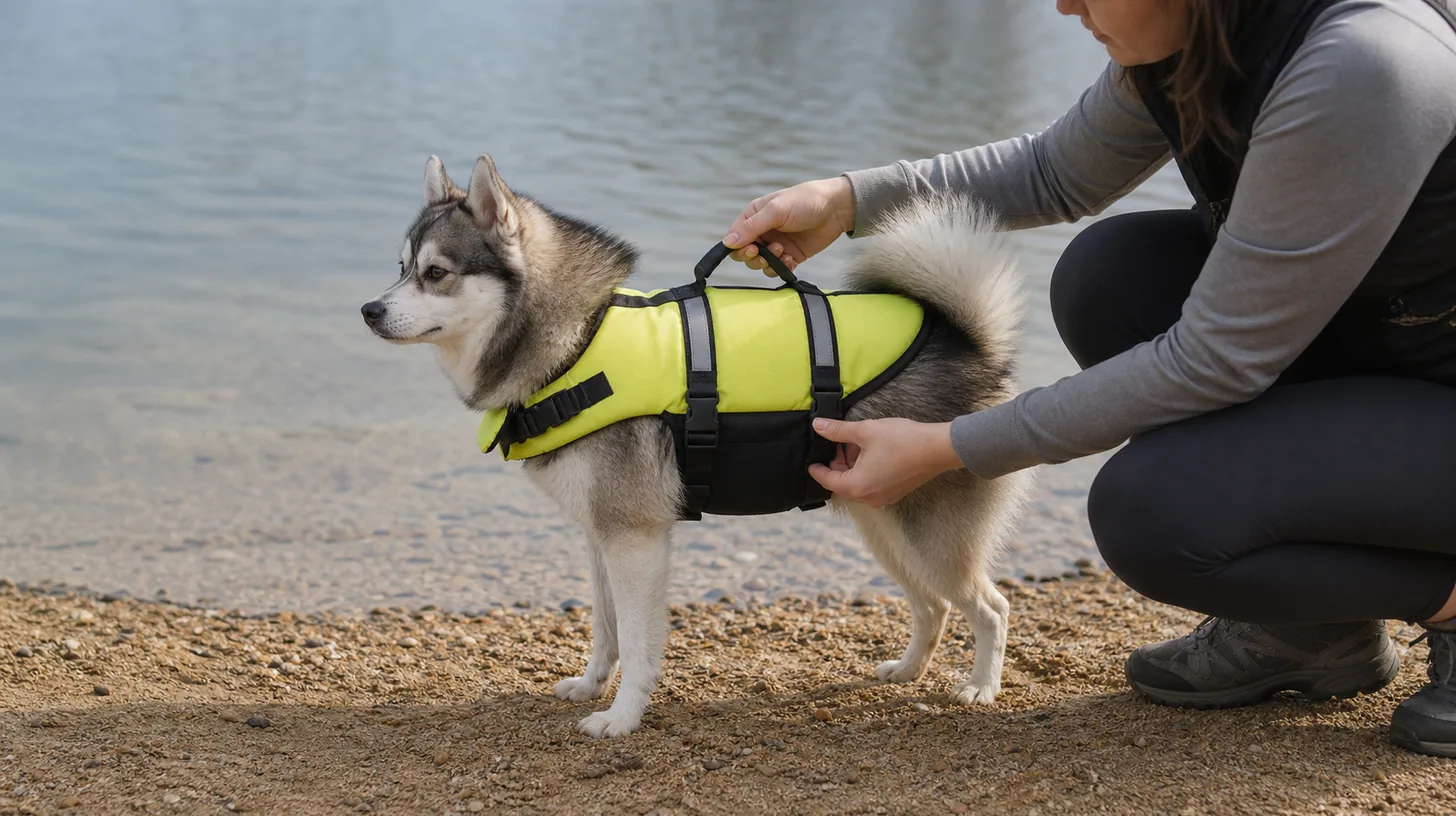
Place the jacket during a calm session on nonslip footing. Fasten and adjust it according to instructions, keeping fur clear of buckles. Straps should lie flat and remain secure without pinching, twisting, or restricting the shoulders, chest, abdomen, or neck.
Check fit while the Pomsky stands, turns, sits if comfortable, and walks several steps. Stop if the dog freezes, struggles, scratches continuously, or shows discomfort.
Check Movement and Clearance
Watch the front and rear legs through a full comfortable walking stride. Confirm the jacket does not slide sideways, rotate, ride into the throat, press into the armpits, or cover elimination areas. Recheck after the double coat compresses.
Fit can change after grooming, coat growth, weight change, or wetting. A previous adjustment is not automatically current.
Evaluate the Lift Handle
Locate the handle and inspect how it attaches to the jacket. Practice placing a hand on it while the Pomsky remains on the ground. The handle is for controlled assistance according to product instructions, not for suspending or swinging the dog.
Plan how a second hand will support the body if emergency assistance is required. Never test the handle by lifting the dog high on land.
Introduce the Jacket Before the Shore
Use several short land sessions if the equipment is new. Pair fitting with calm rewards, ordinary movement, and removal before irritation develops. Let the Pomsky rest without the jacket between sessions.
Do not put on unfamiliar gear for the first time at a crowded beach or boat ramp. The dog should have a chance to communicate discomfort in a quiet setting.
Prepare the Water Site
Walk the human route first. Identify the exact entry and exit, stable footing, water depth change, current, debris, wildlife, weather, shade, and emergency access. Keep towels, fresh drinking water, leash equipment, and a phone on land.
Assign one adult to the Pomsky. Supervision means continuous attention within immediate assisting distance, not watching from a chair or shore far away.
Use a Controlled Approach
Keep the Pomsky connected as appropriate to the site and equipment instructions while approaching. Avoid leash configurations that can tangle around legs or submerged objects. Pause before the water and let the dog observe.
Never pull, push, carry, throw, or lure a hesitant Pomsky into depth. Voluntary approach is part of the safety check.
Begin at a Stable Shallow Edge
Allow only the paws to enter at first. Confirm footing and an unobstructed exit. Let the Pomsky step out immediately. Repeat only if the dog remains relaxed, coordinated, and willing.
Depth should increase gradually, if at all. A session can end after shallow exploration; swimming is not required.
Observe the Jacket in Water
Watch whether the device remains centered and supports the body without pushing the head down, rotating, or restricting the stride. Keep a hand ready at the handle and body without forcing posture.
If fit changes when wet, return to land and reassess. Do not make complicated strap adjustments while the dog is floating.
Use Strict Stop Conditions
End for panic, repeated attempts to climb the caregiver, uncontrolled splashing, coughing, swallowing water, cold signs, fatigue, poor coordination, equipment shift, skin pinching, changing weather, current, or loss of a clear exit.
Move to stable land and provide calm recovery. Breathing difficulty, collapse, persistent coughing, marked weakness, or abnormal behavior requires prompt veterinary attention.
Dry and Recheck the Pomsky
Rinse environmental residue when appropriate, then towel dry without aggressive rubbing. Check the skin and coat under straps, around the neck, behind the front legs, and along the abdomen. Observe gait, breathing, temperature comfort, and recovery.
Wet double coat can conceal friction or make the dog colder after activity. Provide a warm, appropriate recovery area.
Clean and Store the Device
Follow product cleaning instructions, rinse away water and debris as required, and dry the jacket completely before storage. Leave buckles open or configured according to instructions so trapped moisture does not remain hidden.
Inspect again before the next use. Record fit changes, water response, recovery, and any equipment concern.
Reassess Every Location
A calm shallow lake session does not prove readiness for a pool, river, ocean, dock, or boat. Each setting changes entry, exit, current, temperature, noise, and rescue access. Return to the land-fit and site-audit steps when the context changes.
The life jacket is one layer in a complete plan. Appropriate conditions, voluntary entry, continuous adult control, a stable exit, and early stopping remain necessary every time.
Confirm the Exit One Last Time
Before each entry, stand at the planned exit and verify it remains open, stable, and reachable. People, towels, bags, waves, or changing water levels can alter a route that looked clear minutes earlier. End the activity if the exit can no longer support an immediate controlled return to land.
Sources reviewed
Each source is used only for the claim scopes listed below. None establishes a guaranteed Pomsky outcome or replaces individual professional assessment.
- American Animal Hospital Association: Lifestyle and Safety Assessment - Supports: appropriate confinement; leash, collar and harness planning; lifestyle-specific safety review. Limit: Equipment selection must account for the individual dog's anatomy, behavior, health, and environment.
- American Kennel Club: The Importance of a Well-Fitting Harness - Supports: harness measurement; strap clearance; shoulder movement; escape and chafing checks. Limit: No harness corrects pulling by itself or fits every body shape; pain, rubbing, or gait change needs reassessment.
- American Animal Hospital Association: AAHA-AVMA Canine Preventive Healthcare Guidelines - Supports: preventive exams; individual risk assessment; parasite and vaccination planning. Limit: The veterinarian sets the schedule for the individual dog and location.