Written and reviewed by A Pomsky Editorial Team. Originally published 2026-07-26; substantively reviewed July 26, 2026.
Training boundary: Use humane, reward-based methods and protect safety with management. Pain, panic, aggression, a bite history, or serious handling risk requires a veterinarian or qualified behavior professional. Read the editorial policy.
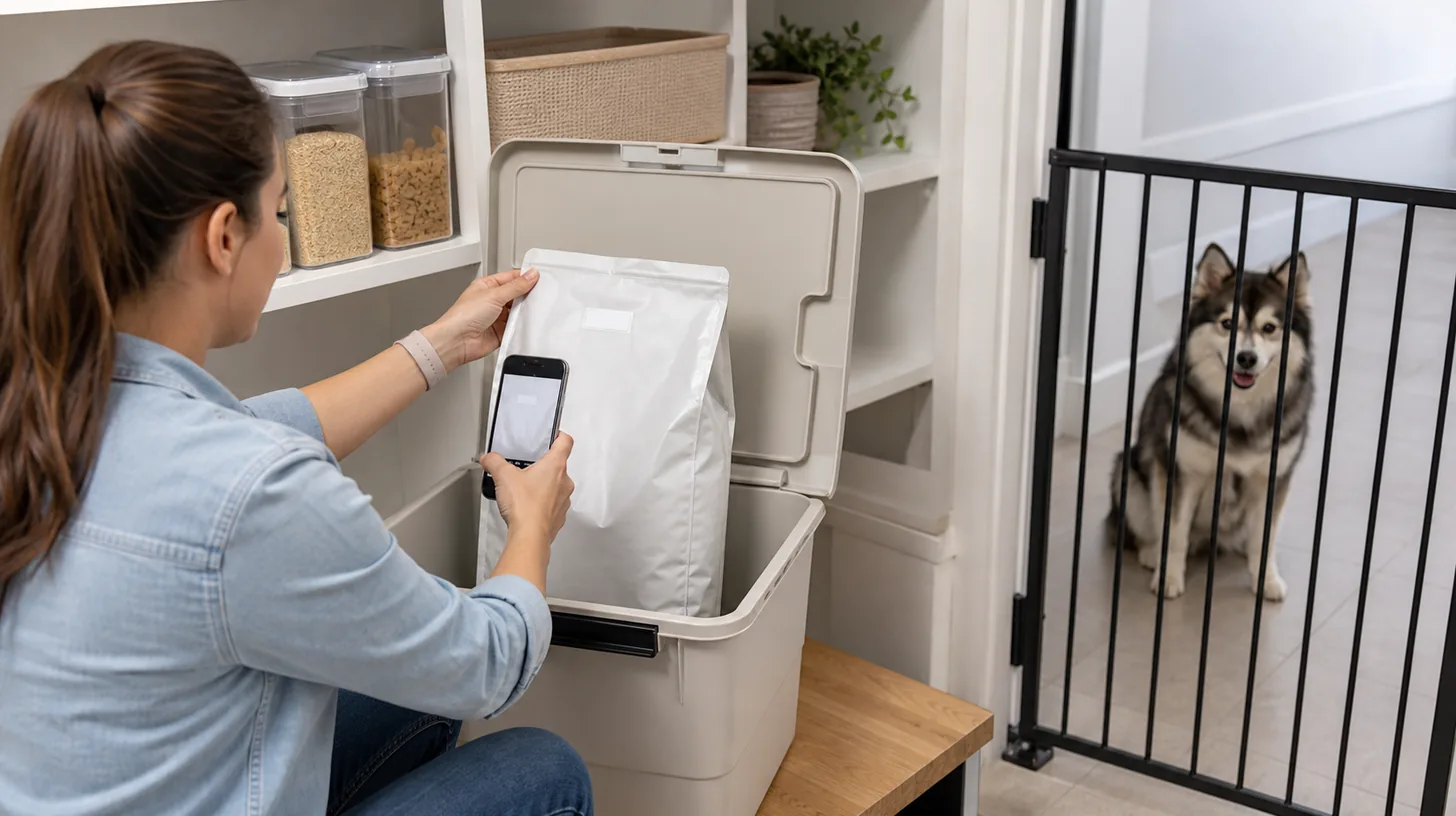
Direct answer: Photograph the unopened package, product name, best-by date, and lot code, then store food in its original closed bag inside a clean, dry, pest-resistant container when appropriate. Record the opening date, use the oldest verified package first, never top off old food with new, and preserve traceability for complaints or recalls.
Safe dog-food storage preserves product identity as well as freshness. Keep the original label and lot code, follow the package directions, prevent moisture, pests, heat, and cross-contamination, date opening, and retain purchase details. If a quality concern arises, the exact product, lot, timeline, and storage record are more useful than a brand name alone.
Capture the Package Before Opening
Photograph the front, product name, recipe, net weight, ingredient panel, guaranteed analysis, nutritional adequacy statement, feeding directions, lot code, and best-by date. Record where and when it was purchased.
Make sure photographs are readable and remain linked to the correct package. Similar bags can contain different life-stage statements or formulations. Do not discard the identifying information after transferring food.
Follow Product-Specific Directions
Read the manufacturer's storage instructions for the exact form: dry, canned, pouch, refrigerated, frozen, or dehydrated. Temperature, refrigeration, resealing, and use-after-opening directions differ.
Do not apply a dry-food routine to wet or fresh food. When instructions are unclear, contact the manufacturer and preserve the response. Veterinary diets may have additional handling needs.
Preserve the Original Package
For dry food, keeping food in its original bag and placing the closed bag inside a clean sealed container can preserve lot identity and provide an additional barrier. Avoid pouring new food directly onto old residue.
If another method is used, retain the clean original bag until the food is finished and keep lot information attached to the container. Do not combine different lots or recipes in one bin.
Choose a Clean Dry Location
Store food away from heat, sunlight, moisture, cleaning chemicals, pests, and areas where the Pomsky can access it. Garages, vehicles, balconies, and damp basements may experience unsafe temperature or humidity changes.
Keep containers off contaminated floors and away from trash. The location should allow inspection and cleaning without spilling food. Secure lids against the individual dog's ability to open them.
Date Opening and Track Use
Write the opening date in the storage record and note when the package is finished or discarded. Record unusual odor, texture, insects, moisture, damaged packaging, or refusal. Do not relabel a quality concern as spoilage without evidence.
Use older appropriate stock before newer stock without mixing lots. Check best-by dates during purchase and storage. The date does not override signs of damage or improper handling.
Keep Scoops and Bowls Clean
Use a dry, dedicated measuring tool and clean it according to the material's instructions. Do not leave a scoop buried in food if hands, moisture, or residue can contaminate it. Wash and dry bowls regularly.
Measure portions consistently. A storage scoop should not become an undefined feeding unit. If several caregivers feed, label the actual measure and maintain the feeding log.
Handle Wet and Refrigerated Food Carefully
Cover opened containers, refrigerate promptly when directed, prevent contact with human food, and discard according to product instructions. Use clean utensils and do not return food from the bowl to the package.
Mark the opening time when the safe period is short. Do not judge safety only by smell. When in doubt, contact the manufacturer or veterinarian rather than feeding a questionable product.
Prevent Cross-Contamination
Wash hands before and after handling pet food, especially in homes with children, older adults, pregnant people, or people with weakened immune systems. Clean preparation surfaces and keep pet bowls separate from human food areas where practical.
Do not use the same unwashed tool across raw, cooked, and dry products. Follow current public-health and manufacturer guidance for higher-risk formats. This page does not endorse a feeding format.
Retain Purchase and Contact Records
Save the receipt, retailer, purchase date, manufacturer contact, and any case number. If food was delivered, keep shipping condition photographs when damage or temperature is relevant. Store only necessary personal data securely.
A complete record connects the product to the household timeline. It supports manufacturer, veterinary, retailer, or regulatory review if a concern occurs.
Respond to a Quality Concern
Stop using a package when a veterinarian, manufacturer, regulator, or evident physical defect indicates it should not be fed. Secure it away from animals. Contact a veterinarian first if the Pomsky is ill.
Preserve the food, bag, lot code, photographs, feeding timeline, symptoms, and storage conditions as directed. Do not mail or discard samples until the responsible service explains what is needed.
Monitor Recall Information
Use current official regulatory and manufacturer channels rather than social-media screenshots. Compare the exact product, lot, size, date, and market. A recall of one item does not automatically identify every product from the company.
Follow official instructions for disposal, return, or veterinary contact. Do not continue feeding because the bag appears normal when the exact lot is included.
Clean Between Packages
Finish or safely discard the old product, remove the original bag, wash the container according to its material, and dry it completely before adding a new closed package. Inspect seals, cracks, and pest access.
Do not top off old food with new. Residue can obscure lot boundaries and carry moisture or contamination. Record the new lot as a separate entry.
Keep the System Traceable
Review the storage location, container, dates, lot photos, and caregiver routine periodically. Update after moving, changing diet, switching formats, or discovering pests or moisture.
The goal is not decorative organization. It is an unbroken chain from exact package to storage conditions to measured feeding. That traceability improves routine hygiene and makes any quality investigation faster and more accurate.
Build a Caregiver Handoff
Place a simple record near the storage area with the product name, opened date, lot-photo location, measuring tool, daily feeding plan, and veterinarian-directed exceptions. Keep the manufacturer's feeding guide as reference material, not as an individualized prescription. Each caregiver should record deviations rather than silently compensating at the next meal.
When a new package arrives, one person verifies that it matches the intended food before opening it. Photograph the sealed package and codes, inspect for damage, and enter the new record. If appearance or odor differs from the previous package, pause and contact the manufacturer or veterinarian as appropriate instead of mixing the products and losing traceability.
For travel or boarding, portion food from the known package into clean labeled containers only when the facility accepts that method, and retain the original lot information at home. Provide written storage and feeding instructions. On return, reconcile unused portions and note any diet changes. This handoff reduces accidental substitutions, duplicate meals, and uncertainty if the Pomsky develops a problem away from home.
Sources reviewed
Each source is used only for the claim scopes listed below. None establishes a guaranteed Pomsky outcome or replaces individual professional assessment.
- U.S. Food and Drug Administration: Animal Food Labeling and Pet Food Claims - Supports: pet food labels; regulated claims; ingredient and product statements. Limit: Do not infer food suitability from marketing language alone.
- World Small Animal Veterinary Association: Selecting a Pet Food for Your Pet - Supports: manufacturer evaluation; food selection questions; quality-control review. Limit: Do not turn the questions into a universal approved-brand list.