Written and reviewed by A Pomsky Editorial Team. Originally published 2026-07-26; substantively reviewed July 26, 2026.
Training boundary: Use humane, reward-based methods and protect safety with management. Pain, panic, aggression, a bite history, or serious handling risk requires a veterinarian or qualified behavior professional. Read the editorial policy.
Direct answer: Check a dry, calm Pomsky in the same order each time: behind the ears, collar and harness lines, armpits, chest, tail base, rear furnishings, and other friction areas. Part small sections with fingers before using an accepted coat tool. Stop for pulling, pain, wetness, skin involvement, or a tight mat, and ask a qualified groomer or veterinarian for help.
Pomsky double coat can tangle where moisture, friction, movement, and loose undercoat meet. Early checks are gentler than waiting until a tight mat pulls the skin. The goal is not to remove every problem at home. It is to find changes promptly, keep handling voluntary, stop before pain or cutting risk, and route difficult mats to a qualified groomer or veterinarian.
Check Only a Calm, Dry Dog
Choose a quiet time when the Pomsky is awake, comfortable, and on nonslip footing. Let a wet coat dry through an appropriate routine before assessing tangles, because moisture can tighten or conceal problems.
Do not begin immediately after intense play, a stressful event, or when the dog is guarding space. Prepare a short session and an easy exit.
Set Up the Area
Use bright diffuse light and a stable mat. Keep a comb or brush already accepted by the Pomsky nearby but out of the walking path. Put scissors, clippers, and unfamiliar products away.
Have small familiar rewards available if appropriate. The caregiver should be able to use both hands without leaning across or pinning the dog.
Establish a Consent Start
Invite the Pomsky onto the mat and begin with a familiar brief touch in a comfortable area. Pause and observe. Continue only while the dog can remain, turn away, and leave without being blocked.
A chin rest, station, or other cooperative-care behavior can help when it has already been trained. It should not be used to hold the dog through discomfort.
Use the Same Body Map
Check in a consistent order so no area is forgotten: behind and under the ears, collar line, neck ruff, harness contact points, chest, armpits, sides, abdomen where safe, tail base, rear furnishings, and lower legs.
The exact order can match the dog's comfort. Record skipped areas and return another day rather than extending the session.
Begin With Sight and Fingers
Look for coat sections that lie differently, separate into cords, hold debris, appear damp, or reveal skin redness. Use fingertips to part a small section down toward the skin without pulling. Compare with nearby normal coat.
Do not rake through resistance. A mat may be larger or closer to the skin than it appears from the surface.
Check Behind the Ears
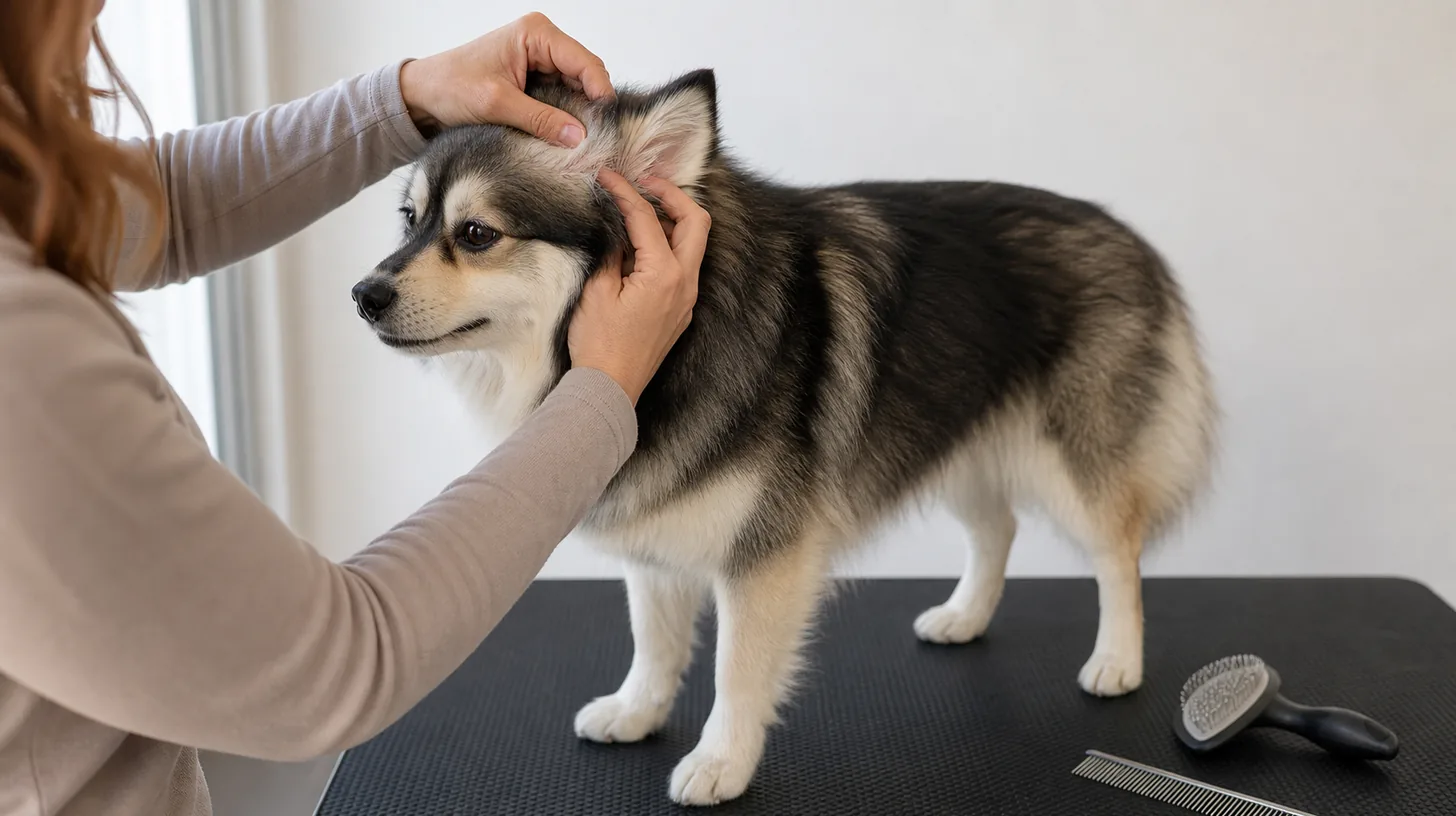
Friction and fine coat can create small tangles behind the ears. Support the ear naturally without folding or stretching it, then part the surrounding coat with fingers. Watch for odor, discharge, redness, moisture, or sensitivity.
Do not place tools in the ear canal. Ear health concerns belong with the veterinary team, not a home dematting attempt.
Inspect Collar and Harness Lines
Remove equipment in a secure indoor area, then inspect where straps cross the neck, chest, shoulders, and behind the front legs. Look for compressed coat, knots, rubbing, dampness, and skin change.
Recheck equipment fit before replacing it. A mat under a strap can increase pressure and discomfort.
Examine Armpits and Chest Carefully
These areas move with every step and may be sensitive. Ask for a small comfortable weight shift rather than lifting or pulling the leg. Use fingers to inspect only what can be reached without forcing a joint.
Stop if the Pomsky withdraws, braces, turns sharply, vocalizes, or cannot resume a relaxed stance.
Review Tail and Rear Furnishings
Check where the tail rests against the body and where long coat contacts the rear legs. Keep the tail in a natural position. Look for debris, moisture, fecal material, odor, or skin involvement.
Hygiene concerns and tight mats near sensitive areas are appropriate reasons for professional grooming or veterinary help.
Distinguish a Loose Tangle From a Tight Mat
A loose surface tangle may separate gently with fingers and an accepted tool. A tight mat feels dense, does not allow comfortable skin-level separation, pulls when the coat moves, or sits against irritated skin.
When uncertain, classify it as a professional problem. Home confidence does not reduce cutting or skin-injury risk.
Avoid Household Scissors
Matted skin can be drawn up inside a coat mass and is difficult to see. Do not slide scissors beneath a mat, cut toward the body, or ask another person to restrain a moving dog for removal.
Clippers also require training, maintained equipment, safe skin tension, and behavior handling. Use a qualified professional rather than improvising.
Use Tools Conservatively
Use only coat-appropriate tools that the Pomsky has accepted and that the household knows how to handle. Work in small sections from the accessible ends while supporting the coat to reduce pulling. Stop at resistance.
Avoid repeated strokes over irritated skin and do not apply oils, sprays, powders, or detanglers without reviewing product and dog-specific safety.
Keep Sessions Short
Inspect one or two zones, reward calm participation, and finish. Several brief checks can be more informative than one full-body struggle. Record what remains.
The end cue should mean handling is finished. Let the Pomsky leave the mat rather than immediately starting another care task.
Record Location and Recurrence
Use a simple body map to mark the exact location, size, moisture, skin appearance, equipment contact, activity, and action taken. Repeated mats in one area can point to fit, drying, friction, mobility, or grooming-schedule issues.
Share the pattern with the groomer and veterinary team. Do not simply cut the area shorter without understanding the cause.
Route Skin and Pain Concerns
Contact a veterinarian for pain, wounds, bleeding, swelling, odor, discharge, parasites, persistent moisture, marked redness, behavior change, or a mat involving damaged skin. A groomer should not be asked to diagnose a medical problem.
Urgent discomfort or rapidly worsening skin change should not wait for a routine grooming appointment.
Prevent Through Drying and Fit
Dry the coat thoroughly after bathing or wet weather using an established safe routine. Check collar and harness fit, remove equipment when appropriate in a secure setting, and inspect friction areas after activity.
Prevention does not mean aggressive daily brushing. The schedule should match coat condition, dog comfort, professional advice, and actual findings.
Recheck After Professional Care
Ask what areas were affected, what home handling is appropriate, and when to recheck. Observe the skin and the Pomsky's behavior after grooming. Report persistent discomfort.
The useful early-check routine is gentle and limited: map the coat, find change before it tightens, stop at resistance, and involve the right professional before a mat becomes a painful home project.
Sources reviewed
Each source is used only for the claim scopes listed below. None establishes a guaranteed Pomsky outcome or replaces individual professional assessment.
- American Animal Hospital Association: Humane Restraint of Animals - Supports: least-stress handling; basket muzzle preparation; positive behavior modification. Limit: Does not authorize forceful restraint or replace veterinary handling decisions.
- American Animal Hospital Association: AAHA-AVMA Canine Preventive Healthcare Guidelines - Supports: preventive exams; individual risk assessment; parasite and vaccination planning. Limit: The veterinarian sets the schedule for the individual dog and location.
- American Veterinary Society of Animal Behavior: Humane Dog Training Position Statement - Supports: reward-based training; aversive-method risk; behavior change principles. Limit: Does not guarantee outcomes for an individual dog.