Written and reviewed by A Pomsky Editorial Team. Originally published 2026-07-26; substantively reviewed July 26, 2026.
Training boundary: Use humane, reward-based methods and protect safety with management. Pain, panic, aggression, a bite history, or serious handling risk requires a veterinarian or qualified behavior professional. Read the editorial policy.
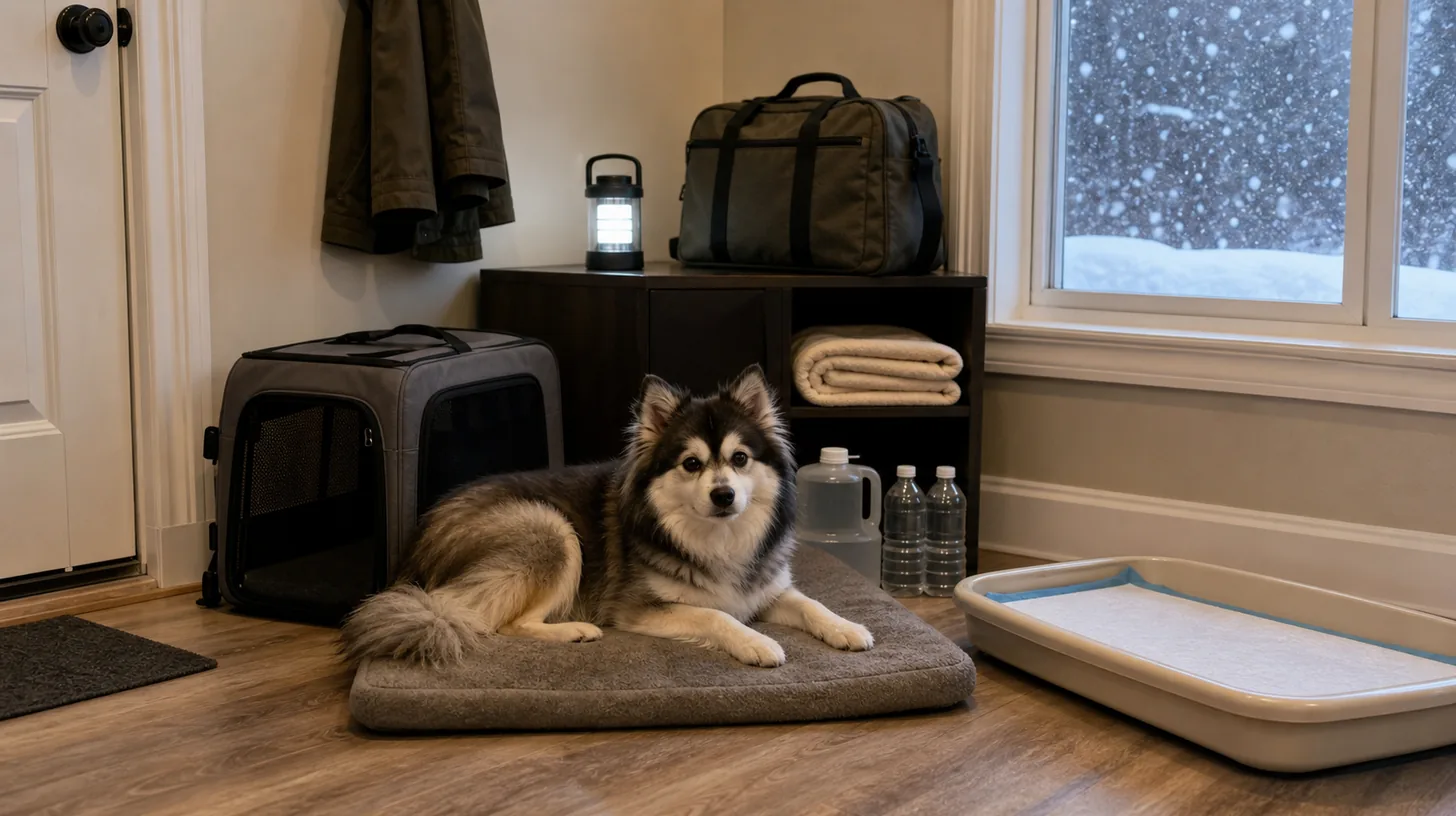
Direct answer: Follow current local blizzard and emergency instructions and bring your Pomsky indoors before travel and visibility deteriorate. Reconcile identification, current medication, food, water, records, restraint or carrier and cleanup supplies. Prepare a warm secure indoor base, a planned indoor toilet option and the shortest possible essential outdoor route only if conditions permit. Check safe backup lighting, communication, temperature monitoring and an evacuation destination in case heat or power fails. Cancel nonessential travel and do not leave the Pomsky outdoors, in a vehicle or in an unheated space. After the event, inspect doors, accumulated snow, ice, fencing, utilities and the walking surface before ordinary routines resume.
A blizzard combines snow, wind, visibility, travel and possible utility failure over a longer period than one cold toilet trip. This page owns shelter-in-place preparation and the switch to evacuation when the home can no longer support safe care. The cold-snap page manages one necessary exit, the power-outage page applies to any outage, and the snow-fence audit starts after accumulation changes a yard barrier. Prepare source-backed supplies and roles before conditions close the route.
Follow the Current Blizzard Instructions
Record the affected period, expected hazards and local shelter or travel directions without relying on an old forecast.
Perform this check before adding the next variable. The target remains maintain a secure supplied indoor base for the Pomsky through a blizzard while preserving a clear power, medical and evacuation contingency. Work in a heated secure interior room with identification, current records, labeled medications, food and water under existing plans, carrier or restraint, safe lighting, communication, cleanup materials and local alert access. If the setup cannot preserve that condition, simplify it or stop rather than relying on speed or physical control. In this routine, step 1 is the follow the current blizzard instructions decision.
Stop when the expected condition is absent or the situation begins to depend on force, luck, or an open boundary. Specifically avoid late travel, poor visibility, unplanned outdoor exposure, frozen doors, snow-drift escape routes, ice, unsafe heaters, candles, generator fumes, food or medication shortage, loss of communication or delayed evacuation. The follow-up record should cover warning source, shelter start, dog and caregiver count, identification, medication, food, water, temperature, power, toilet plan, outdoor exit, route condition, professional contact, evacuation threshold and post-event audit. Record the result of follow the current blizzard instructions before continuing.
Bring the Pomsky Indoors Early
Complete ordinary exercise and supply movement before visibility, wind and surfaces deteriorate.
Use an observable pass condition: the relevant item is checked, the boundary is closed, and the Pomsky can remain safe without being used as a test. This protects the main objective, maintain a secure supplied indoor base for the Pomsky through a blizzard while preserving a clear power, medical and evacuation contingency, while leaving a clear point at which the caregiver can step back. In this routine, step 2 is the bring the pomsky indoors early decision.
The absence of an incident is not proof that the arrangement is sound. Recheck for late travel, poor visibility, unplanned outdoor exposure, frozen doors, snow-drift escape routes, ice, unsafe heaters, candles, generator fumes, food or medication shortage, loss of communication or delayed evacuation. Document warning source, shelter start, dog and caregiver count, identification, medication, food, water, temperature, power, toilet plan, outdoor exit, route condition, professional contact, evacuation threshold and post-event audit so a later caregiver can distinguish a passed step from one that was skipped. Record the result of bring the pomsky indoors early before continuing.
Reconcile Identification and Records
Verify current tags, microchip contact route, photographs, veterinary contacts and essential records in a protected packet.
Keep the sequence repeatable across caregivers. Say what is being checked, complete it, and return equipment and people to neutral before continuing. In this page's context, success means maintain a secure supplied indoor base for the Pomsky through a blizzard while preserving a clear power, medical and evacuation contingency; it does not mean proving that a known risk can be tolerated. In this routine, step 3 is the reconcile identification and records decision.
If the Pomsky cannot remain comfortable or the equipment and environment cannot remain controlled, end the attempt. Do not proceed through late travel, poor visibility, unplanned outdoor exposure, frozen doors, snow-drift escape routes, ice, unsafe heaters, candles, generator fumes, food or medication shortage, loss of communication or delayed evacuation. Capture warning source, shelter start, dog and caregiver count, identification, medication, food, water, temperature, power, toilet plan, outdoor exit, route condition, professional contact, evacuation threshold and post-event audit before deciding what changes next. Record the result of reconcile identification and records before continuing.
Count Source-Backed Supplies
Check current medication, prescribed food, water, cleanup items and equipment against professional and product directions.
Treat this as one part of the complete routine, not an isolated trick. The surrounding setup is a heated secure interior room with identification, current records, labeled medications, food and water under existing plans, carrier or restraint, safe lighting, communication, cleanup materials and local alert access. A clean transition reduces ambiguity and makes it easier to notice when the dog, equipment, environment, or records differ from the previous attempt. In this routine, step 4 is the count source-backed supplies decision.
Do not convert this step into a stress test. The principal avoidable risks are late travel, poor visibility, unplanned outdoor exposure, frozen doors, snow-drift escape routes, ice, unsafe heaters, candles, generator fumes, food or medication shortage, loss of communication or delayed evacuation. Write down warning source, shelter start, dog and caregiver count, identification, medication, food, water, temperature, power, toilet plan, outdoor exit, route condition, professional contact, evacuation threshold and post-event audit; a short factual note is more useful than a reassuring guess. Record the result of count source-backed supplies before continuing.
Prepare a Warm Secure Base
Choose an interior area with safe temperature monitoring, clear exits, stable bedding and no heater or cord access.
Pause long enough to inspect the result rather than assuming the action worked. Look at the dog, the physical boundary, and the next movement available to the caregiver. Continue only when the arrangement still supports maintain a secure supplied indoor base for the Pomsky through a blizzard while preserving a clear power, medical and evacuation contingency. In this routine, step 5 is the prepare a warm secure base decision.
Stop when the expected condition is absent or the situation begins to depend on force, luck, or an open boundary. Specifically avoid late travel, poor visibility, unplanned outdoor exposure, frozen doors, snow-drift escape routes, ice, unsafe heaters, candles, generator fumes, food or medication shortage, loss of communication or delayed evacuation. The follow-up record should cover warning source, shelter start, dog and caregiver count, identification, medication, food, water, temperature, power, toilet plan, outdoor exit, route condition, professional contact, evacuation threshold and post-event audit. Record the result of prepare a warm secure base before continuing.
Define the Toilet Plan
Prepare an indoor option and one shortest controlled outdoor route only when current conditions allow an essential exit.
A second capable adult can verify the boundary during early practice or higher-risk situations. That person should follow the same sequence and avoid adding prompts, handling, or access that changes the task. The shared standard remains maintain a secure supplied indoor base for the Pomsky through a blizzard while preserving a clear power, medical and evacuation contingency. In this routine, step 6 is the define the toilet plan decision.
The absence of an incident is not proof that the arrangement is sound. Recheck for late travel, poor visibility, unplanned outdoor exposure, frozen doors, snow-drift escape routes, ice, unsafe heaters, candles, generator fumes, food or medication shortage, loss of communication or delayed evacuation. Document warning source, shelter start, dog and caregiver count, identification, medication, food, water, temperature, power, toilet plan, outdoor exit, route condition, professional contact, evacuation threshold and post-event audit so a later caregiver can distinguish a passed step from one that was skipped. Record the result of define the toilet plan before continuing.
Prepare for Power or Heat Loss
Use the existing outage plan for safe lighting, communication and equipment and define when the home is no longer suitable.
Perform this check before adding the next variable. The target remains maintain a secure supplied indoor base for the Pomsky through a blizzard while preserving a clear power, medical and evacuation contingency. Work in a heated secure interior room with identification, current records, labeled medications, food and water under existing plans, carrier or restraint, safe lighting, communication, cleanup materials and local alert access. If the setup cannot preserve that condition, simplify it or stop rather than relying on speed or physical control. In this routine, step 7 is the prepare for power or heat loss decision.
If the Pomsky cannot remain comfortable or the equipment and environment cannot remain controlled, end the attempt. Do not proceed through late travel, poor visibility, unplanned outdoor exposure, frozen doors, snow-drift escape routes, ice, unsafe heaters, candles, generator fumes, food or medication shortage, loss of communication or delayed evacuation. Capture warning source, shelter start, dog and caregiver count, identification, medication, food, water, temperature, power, toilet plan, outdoor exit, route condition, professional contact, evacuation threshold and post-event audit before deciding what changes next. Record the result of prepare for power or heat loss before continuing.
Assign Caregiver and Handoff Roles
Name who controls doors, handles the Pomsky, monitors alerts, records medication and prepares transport.
Use an observable pass condition: the relevant item is checked, the boundary is closed, and the Pomsky can remain safe without being used as a test. This protects the main objective, maintain a secure supplied indoor base for the Pomsky through a blizzard while preserving a clear power, medical and evacuation contingency, while leaving a clear point at which the caregiver can step back. In this routine, step 8 is the assign caregiver and handoff roles decision.
Do not convert this step into a stress test. The principal avoidable risks are late travel, poor visibility, unplanned outdoor exposure, frozen doors, snow-drift escape routes, ice, unsafe heaters, candles, generator fumes, food or medication shortage, loss of communication or delayed evacuation. Write down warning source, shelter start, dog and caregiver count, identification, medication, food, water, temperature, power, toilet plan, outdoor exit, route condition, professional contact, evacuation threshold and post-event audit; a short factual note is more useful than a reassuring guess. Record the result of assign caregiver and handoff roles before continuing.
Preserve an Evacuation Option
Confirm destination, route, carrier or restraint and vehicle readiness without waiting until officials or conditions require departure.
Keep the sequence repeatable across caregivers. Say what is being checked, complete it, and return equipment and people to neutral before continuing. In this page's context, success means maintain a secure supplied indoor base for the Pomsky through a blizzard while preserving a clear power, medical and evacuation contingency; it does not mean proving that a known risk can be tolerated. In this routine, step 9 is the preserve an evacuation option decision.
Stop when the expected condition is absent or the situation begins to depend on force, luck, or an open boundary. Specifically avoid late travel, poor visibility, unplanned outdoor exposure, frozen doors, snow-drift escape routes, ice, unsafe heaters, candles, generator fumes, food or medication shortage, loss of communication or delayed evacuation. The follow-up record should cover warning source, shelter start, dog and caregiver count, identification, medication, food, water, temperature, power, toilet plan, outdoor exit, route condition, professional contact, evacuation threshold and post-event audit. Record the result of preserve an evacuation option before continuing.
Audit the Post-Blizzard Route
Inspect doors, roof and utility hazards, accumulated snow, fencing, ice and deicing residue before normal access.
Treat this as one part of the complete routine, not an isolated trick. The surrounding setup is a heated secure interior room with identification, current records, labeled medications, food and water under existing plans, carrier or restraint, safe lighting, communication, cleanup materials and local alert access. A clean transition reduces ambiguity and makes it easier to notice when the dog, equipment, environment, or records differ from the previous attempt. In this routine, step 10 is the audit the post-blizzard route decision.
The absence of an incident is not proof that the arrangement is sound. Recheck for late travel, poor visibility, unplanned outdoor exposure, frozen doors, snow-drift escape routes, ice, unsafe heaters, candles, generator fumes, food or medication shortage, loss of communication or delayed evacuation. Document warning source, shelter start, dog and caregiver count, identification, medication, food, water, temperature, power, toilet plan, outdoor exit, route condition, professional contact, evacuation threshold and post-event audit so a later caregiver can distinguish a passed step from one that was skipped. Record the result of audit the post-blizzard route before continuing.
When to Stop and Escalate
Stop when the Pomsky, caregiver, equipment, records, or environment no longer supports maintain a secure supplied indoor base for the Pomsky through a blizzard while preserving a clear power, medical and evacuation contingency. Do not improvise through late travel, poor visibility, unplanned outdoor exposure, frozen doors, snow-drift escape routes, ice, unsafe heaters, candles, generator fumes, food or medication shortage, loss of communication or delayed evacuation. Seek local emergency and utility authorities for event instructions, the veterinary team for medical or medication concerns, and a confirmed pet-accepting destination when evacuation is required. Bring the factual observations already collected rather than recreating the event.
Before another attempt, review warning source, shelter start, dog and caregiver count, identification, medication, food, water, temperature, power, toilet plan, outdoor exit, route condition, professional contact, evacuation threshold and post-event audit. Resume only after the responsible person, physical setup, and controlling instructions are clear. A stop is part of the protocol: it preserves useful evidence and prevents uncertainty from becoming exposure.
Keep the Routine Current
Recheck the complete setup whenever the dog, household, product, instructions, environment, or purpose changes. The intended outcome remains maintain a secure supplied indoor base for the Pomsky through a blizzard while preserving a clear power, medical and evacuation contingency, not a perfect-looking performance. Use the newest primary instruction, retain dated records, and retire superseded assumptions so every caregiver begins from the same current plan.
Sources reviewed
Each source is used only for the claim scopes listed below. None establishes a guaranteed Pomsky outcome or replaces individual professional assessment.
- U.S. Centers for Disease Control and Prevention: Pet Emergency Preparedness - Supports: evacuation planning; pet records; emergency supplies; disaster readiness. Limit: Local emergency authority instructions take priority.
- U.S. Centers for Disease Control and Prevention: Pet Emergency Checklist - Supports: emergency kit contents; records; identification; transport supplies. Limit: Adapt the checklist to local hazards and the dog's medical needs.
- ASPCA: Walking Your Dog in a Winter Wonderland? Protect Your Pet's Paws With These Tips - Supports: post-walk paw rinsing and drying; ice and salt removal; paw-pad inspection. Limit: Persistent irritation, cracking, bleeding, ingestion, or illness requires veterinary or poison-control advice.