Written and reviewed by A Pomsky Editorial Team. Originally published 2026-07-26; substantively reviewed July 26, 2026.
Training boundary: Use humane, reward-based methods and protect safety with management. Pain, panic, aggression, a bite history, or serious handling risk requires a veterinarian or qualified behavior professional. Read the editorial policy.
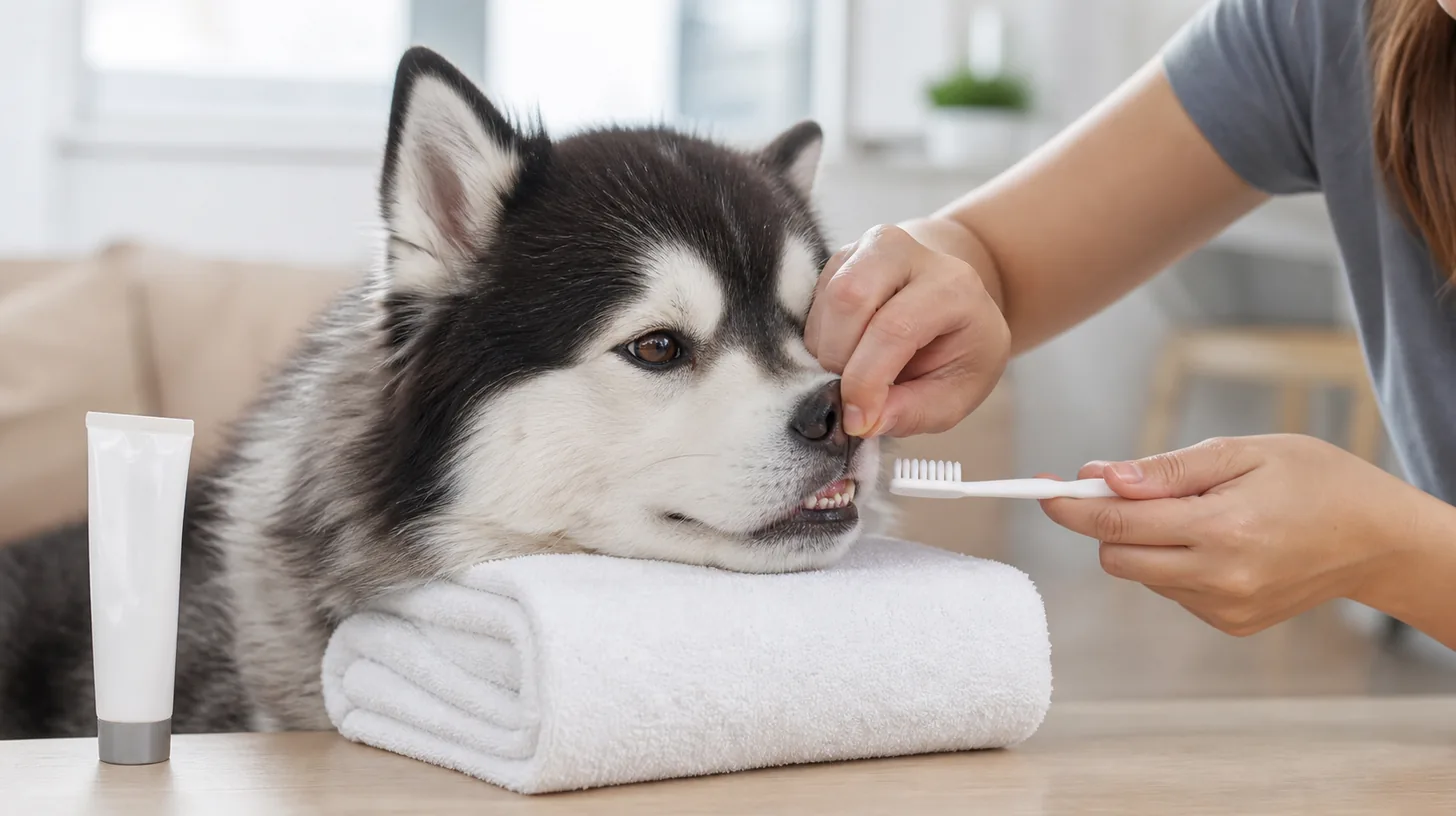
Direct answer: Brush a Pomsky's teeth by first teaching calm lip lifts and brief contact, then introducing a dog toothbrush and dog toothpaste in very short sessions. Reward voluntary participation, focus on the outer tooth surfaces, never use human toothpaste, and stop for pain, bleeding, marked fear, loose teeth, or other signs that need veterinary assessment.
Home tooth brushing is a preventive routine, not a substitute for a veterinary dental examination. A Pomsky may need time to accept lip handling, the taste of dog toothpaste, and the movement of a brush. Build those pieces separately, keep sessions brief, and stop when the dog shows pain, fear, or a sudden change in tolerance.
Start With a Professional Baseline
Ask your veterinarian to assess the mouth before beginning a new brushing routine, especially when you see bad breath, bleeding, broken teeth, swelling, reduced appetite, one-sided chewing, pawing at the mouth, or reluctance to have the face touched. Brushing cannot remove established calculus below the gumline, repair a damaged tooth, or diagnose periodontal disease.
A normal-looking front tooth does not prove that the entire mouth is healthy. The American Animal Hospital Association's dental guidance places home care within a broader dental plan that includes professional assessment. Use the visit to ask which surfaces to prioritize, whether current disease changes the plan, and what products are appropriate for your individual dog.
Choose Dog-Safe Supplies
Use toothpaste formulated for dogs. Human toothpaste may contain ingredients that should not be swallowed by a dog, and a Pomsky cannot rinse and spit on command. Choose a small, soft-bristled pet toothbrush, finger brush, or veterinary-recommended alternative that fits the mouth without forcing the jaw open.
Keep the equipment simple at first: toothpaste, brush, a non-slip mat, and tiny rewards. Avoid sharp dental tools, improvised scraping, essential oils, whitening products, and products that promise to replace professional care without credible evidence. Store everything where the dog cannot chew or swallow it between sessions.
Teach Voluntary Lip Handling First
Begin when your Pomsky is relaxed and not cornered. Present a hand near the cheek, mark calm orientation, and reward. Progress to a brief touch on the cheek, then a one-second lip lift. Release immediately and offer a reward away from the face. The dog should be free to move its head away.
Do not hold the muzzle shut or pin the dog in place. If the dog freezes, turns away repeatedly, paws at your hand, growls, snaps, or leaves, lower the difficulty. Reward-based handling protects communication and reduces the chance that warning signals are suppressed. A cooperative chin-rest behavior can provide a useful start-and-stop signal, but it does not make restraint acceptable.
Introduce Toothpaste and the Brush Separately
Let the Pomsky investigate a tiny amount of dog toothpaste according to the product directions. Reward a calm sniff or lick without pushing the paste into the mouth. On a different repetition, show the dry brush, reward calm attention, and put it away. Then touch the brush briefly to the outside of the cheek before working under the lip.
Separate exposure prevents several unfamiliar sensations from arriving at once. If the brush predicts only a long procedure, avoidance can grow quickly. Keep early sessions short enough that the dog finishes while still comfortable. One successful touch is more useful than completing the whole mouth through struggle.
Brush the Outer Tooth Surfaces
When lip lifts and brush contact are comfortable, angle the bristles gently toward the gumline on the outer surfaces. Use small, controlled motions and very light pressure. Start with one or two accessible teeth, release, and reward. Build the number of teeth across many sessions rather than trying to finish every surface immediately.
The outer surfaces are often the practical focus because forcing the mouth open creates conflict and risk. Follow your veterinarian's instructions for the individual dog. Do not brush an area that appears painful, actively bleeding, fractured, swollen, or ulcerated. Stop if the brush causes coughing, gagging, panic, or unsafe movement.
Build a Repeatable Routine
Use the same quiet location, mat, supplies, and release word. Prepare everything before inviting the dog so there is no long wait in position. Track what the Pomsky comfortably accepted: lip lift duration, brush contact, number of teeth, and body-language changes. Increase only one variable at a time.
Consistency matters more than a heroic session. If a day is difficult, return to a smaller cooperative step instead of forcing completion. Household members should use the same cues and handling rules. Keep rewards compatible with the dog's normal diet and veterinary nutrition plan rather than adding large unmeasured extras.
Know When to Stop and Call the Veterinarian
Stop home brushing and contact a veterinarian for mouth pain, facial swelling, persistent bleeding, a loose or broken tooth, pus, a new lump, refusal to eat, marked drooling, or a sudden behavior change around the head. Urgent signs require prompt professional direction. Do not use the article to decide whether anesthesia, extraction, antibiotics, imaging, or another treatment is needed.
A previously cooperative dog that suddenly resists may be communicating pain. Treat that change as information, not disobedience. A veterinary team can reassess the mouth and help redesign home care after the medical issue is addressed.
Review Progress Without Forcing It
Review the routine every few weeks. Check whether the dog approaches willingly, whether the brush still fits, whether toothpaste remains acceptable, and whether any new sensitivity has appeared. Bring questions and your home-care notes to preventive visits.
Success is not a perfectly still Pomsky or a guaranteed disease-free mouth. It is a sustainable cooperative routine that supports, but never replaces, professional dental care. Protecting consent signals and stopping at pain or fear makes the routine safer and more useful over time.
Create a Care Handoff Note
Write a short private note for another caregiver describing the approved toothpaste and brush, storage location, start behavior, release word, current comfortable duration, reward, and stop signals. Include the veterinary clinic's contact details and the date of the most recent dental assessment. This prevents a pet sitter from improvising a longer or more forceful session.
The note should state that missed brushing is preferable to restraint or injury. A caregiver who has not practiced the cooperative routine should not attempt a full mouth session. They can preserve the established cues, offer an easy lip-handling repetition if appropriate, or simply wait for the primary caregiver.
Bring the same record to veterinary visits. Note which mouth areas are easy or sensitive and any trend in breath, eating, drooling, or tolerance. Avoid photographing inside the mouth when doing so requires force. Clear observations help the veterinary team decide what needs hands-on assessment.
Review products when they expire, become damaged, or are recalled. Replace a splayed brush and keep each dog's supplies separate. A written handoff makes the routine reproducible without pretending that every household member has the same handling skill.
Sources reviewed
Each source is used only for the claim scopes listed below. None establishes a guaranteed Pomsky outcome or replaces individual professional assessment.
- American Animal Hospital Association: Dental Care Guidelines for Dogs and Cats - Supports: professional dental assessment; home dental care; anesthesia context. Limit: Do not diagnose dental disease or prescribe treatment.
- American Veterinary Society of Animal Behavior: Humane Dog Training Position Statement - Supports: reward-based training; aversive-method risk; behavior change principles. Limit: Does not guarantee outcomes for an individual dog.