Written and reviewed by A Pomsky Editorial Team. Originally published 2026-07-26; substantively reviewed July 26, 2026.
Training boundary: Use humane, reward-based methods and protect safety with management. Pain, panic, aggression, a bite history, or serious handling risk requires a veterinarian or qualified behavior professional. Read the editorial policy.
Direct answer: Record observable hearing, vision, orientation, sleep, and startle changes and arrange veterinary review rather than assuming normal aging. Keep routes and furniture predictable, improve lighting, approach within view, protect sleep, gate stairs and exits, and give every caregiver the same cues and door protocol.
Changes in hearing, vision, orientation, sleep, or startle response in a senior Pomsky deserve observation and veterinary review. Do not assume that every change is normal aging. A home audit can reduce collision, fall, escape, and surprise risk while the veterinarian evaluates possible causes and helps define an individual care plan.
Record Observable Changes
Write what happened, when, and in which conditions. Useful observations include missing a familiar sound, hesitating in dim light, bumping into an object, difficulty locating a doorway, startling when touched, changed sleep, staring, pacing, or becoming stuck behind furniture.
Avoid diagnosing deafness, blindness, dementia, or stubbornness. Note frequency, side or direction when relevant, duration, recovery, medications, appetite, mobility, and other changes. Preserve short videos when they can be obtained safely.
Arrange Veterinary Review
Contact the veterinarian for new, worsening, or concerning changes. Sudden vision or balance change, collapse, seizures, severe pain, marked confusion, injury, or other acute signs may need urgent care. Ask the clinic how quickly the Pomsky should be seen.
Bring the timeline, videos, medication and supplement list, preventive-care record, and questions. Hearing or vision behavior can be affected by ear, eye, neurologic, pain, medication, and other health factors that a home checklist cannot distinguish.
Keep Routes Predictable
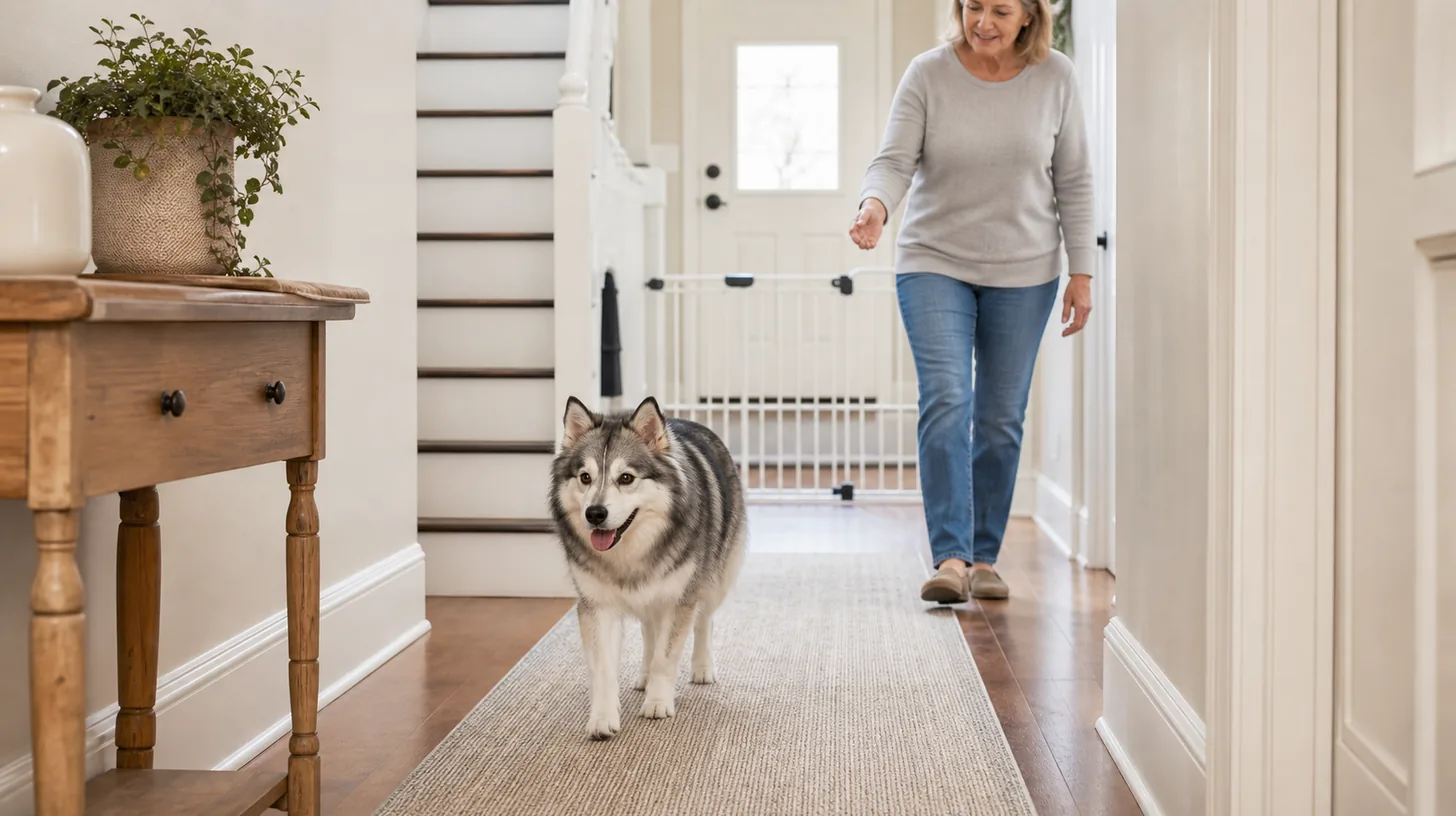
Maintain stable paths between bed, water, food, toilet exit, and family areas. Avoid moving large furniture without a transition plan. Keep floors clear of bags, cords, toys, and low tables. Use nonslip surfaces where the Pomsky already travels.
When a change is necessary, guide the dog calmly in good light and monitor the route. Do not repeatedly rearrange the environment to test memory or vision. Predictability supports independent movement without claiming to treat the underlying cause.
Improve Lighting and Contrast
Provide even lighting along stairs, hallways, doorways, and toilet routes, especially at dawn, dusk, and night. Reduce glare and deep shadows where possible. Contrast between a bed, floor, step edge, and bowl area may help some dogs navigate.
Secure cords and choose lighting that does not become hot or create a trip hazard. Do not shine bright lights into the Pomsky's eyes or assume better lighting proves a vision diagnosis.
Protect Stairs and Elevated Areas
Use secure gates and supervision around stairs, balconies, open windows, decks, pools, and furniture from which the Pomsky could fall. Review thresholds and single steps that may be missed. Keep climbing routes away from openings.
Ramps and steps must fit the individual dog, surface, angle, and caregiver ability. Introduce equipment gradually and seek veterinary or rehabilitation guidance for mobility limitations. Sensory and movement changes can occur together.
Adapt the Approach Cue
Approach within the Pomsky's likely field of view and use a gentle consistent cue before touching. Create light floor vibration by walking normally rather than startling the dog. Let the dog orient, then offer a hand to investigate if that is comfortable.
Never grab a sleeping or cornered senior dog to test hearing. Children and visitors should wait for adult guidance. A startle response can create bite risk even in a dog with no previous incident.
Protect Rest and Sleep
Place a supportive bed in a quiet location outside the main traffic path, with clear access and no need to climb. Keep water available according to the care plan. Use barriers so children and other animals cannot disturb the Pomsky while sleeping.
Changed sleep can have several causes. Record pacing, vocalization, nighttime waking, accidents, and settling rather than correcting the dog. Discuss repeated changes with the veterinarian.
Make Doors and Outdoor Time Safer
Use current identification, secure fencing, leash control, and a closed secondary barrier at exterior doors. A dog that no longer hears a recall or misjudges an opening needs more physical prevention, not louder testing. Inspect gates and latches regularly.
Choose familiar low-hazard toilet and walking routes. Allow time to orient and avoid pulling the dog into darkness, crowds, or fast-moving traffic. Weather, surface, and recovery limits still apply.
Coordinate Food, Water, and Medication Areas
Keep bowls and medication routines in consistent locations unless the veterinarian directs a change. Ensure another animal cannot block access. Use a caregiver record so missed meals, duplicate doses, or apparent difficulty locating resources can be identified accurately.
Do not change diet, supplements, or medication because of a suspected sensory issue without veterinary guidance. Record the exact product and timing of anything already given.
Prepare Visitors and Other Caregivers
Write the approach cue, sleeping rule, door protocol, safe routes, barriers, medication instructions, and emergency contacts. Demonstrate them to sitters and family. A note saying “he cannot hear well” is not enough to create a safe interaction.
Use full separation during noisy gatherings, repairs, deliveries, or child visits when the environment cannot remain predictable. The senior Pomsky does not need to greet everyone.
Review the Audit Regularly
Recheck lighting, routes, gates, furniture, resting areas, equipment, and caregiver routines after any health change or household rearrangement. Compare the observation record with the veterinarian's findings and update the plan accordingly.
The goal is not to prove a sensory diagnosis at home. It is to notice change, reduce preventable hazards, communicate accurately, and preserve comfortable choice. Stable routes, careful approaches, protected rest, physical escape prevention, and timely veterinary assessment create a safer home for a senior Pomsky.
Create a Room-by-Room Action List
For each room, list the ordinary purpose, entry and exit, lighting, floor surface, obstacle, elevated edge, resting option, and caregiver cue. Mark each item as acceptable, temporarily blocked, corrected, or awaiting professional advice. Photograph the final safe arrangement so later furniture drift is easy to recognize.
Prioritize the routes used every day rather than redesigning the entire home at once. Confirm the bedroom-to-toilet route, water access, exterior-door containment, and protected sleep area first. Date each correction and review it after veterinary findings. This converts concern into observable changes without turning a home checklist into a diagnosis.
Ask each caregiver to report changes using the same neutral terms and dates. Consistent observations help distinguish a repeatable pattern from one unusual event and give the veterinarian a clearer history.
Sources reviewed
Each source is used only for the claim scopes listed below. None establishes a guaranteed Pomsky outcome or replaces individual professional assessment.
- American Animal Hospital Association: Pain Management: 2023 AAHA Senior Care Guidelines - Supports: traction surfaces; ramps and mobility aids; resting-area and home-hazard adaptation. Limit: Environmental changes support access but do not diagnose or treat pain, arthritis, neurologic disease, or mobility loss.
- American Animal Hospital Association: AAHA-AVMA Canine Preventive Healthcare Guidelines - Supports: preventive exams; individual risk assessment; parasite and vaccination planning. Limit: The veterinarian sets the schedule for the individual dog and location.