Written and reviewed by A Pomsky Editorial Team. Originally published 2026-07-26; substantively reviewed July 26, 2026.
Training boundary: Use humane, reward-based methods and protect safety with management. Pain, panic, aggression, a bite history, or serious handling risk requires a veterinarian or qualified behavior professional. Read the editorial policy.
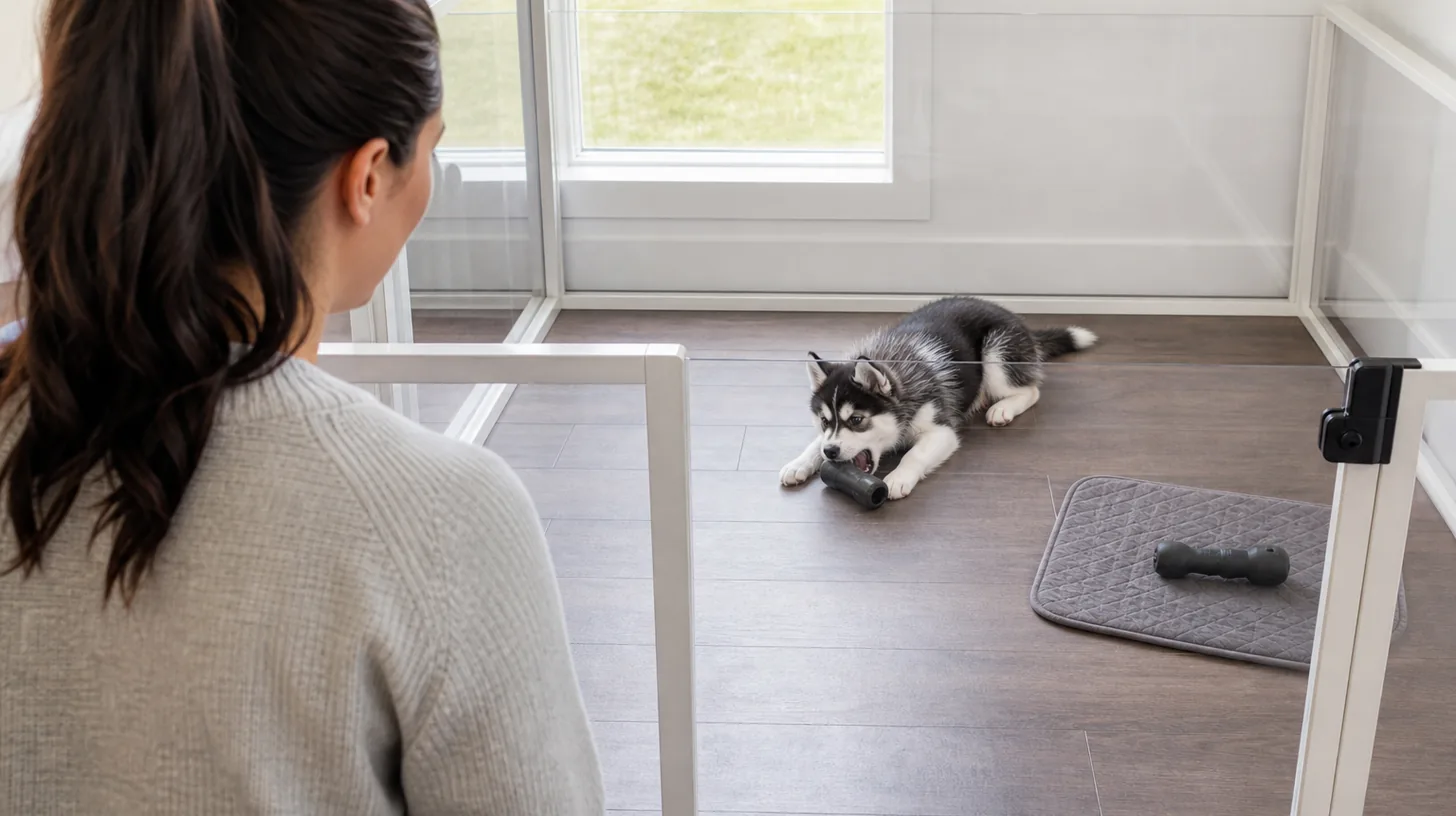
Direct answer: Create a gated supervised puppy zone, inspect it from puppy height, remove cords and swallowable objects, and offer only a small rotation of size-appropriate veterinarian-approved chew options. Inspect and count items after use, trade calmly for unsafe objects, protect rest, and contact a veterinarian after missing pieces, possible ingestion, dental injury, pain, or concerning mouth changes.
A teething Pomsky puppy explores with the mouth while the household contains cords, fabric, furniture, children's items, packaging, plants, and other objects not designed for chewing. The practical response is not punishment. It is a supervised puppy zone, aggressive hazard removal, a small rotation of appropriate chew options, calm item trades, rest, and prompt veterinary routing after ingestion, injury, or concerning mouth changes.
Define the Puppy Zone
Choose a clean, comfortable area with nonslip flooring, secure barriers, water access as appropriate, a resting place, and enough room for supervised movement. The zone should not include stairs, dangling fabric, unstable furniture, or reachable storage.
An exercise pen or gated room must be installed and used according to its design. Check gaps, height, latches, and climbing opportunities for the individual puppy. A zone is not safe merely because it is marketed for pets.
Inspect From Puppy Height
Get low enough to see cords, outlets, rug edges, staples, fasteners, dropped food, medication, small toys, foam, string, hair ties, remote controls, shoes, and gaps beneath furniture. Move hazards into closed storage rather than placing them slightly higher.
Repeat the inspection daily. Family activity changes the floor constantly, and one dropped object can undermine an otherwise careful setup.
Protect Electrical Hazards
Route cords outside the zone or behind a fixed barrier. Unplug and store movable devices. Use covers only as part of a broader access-control system and follow product directions. Do not coat cords with unverified household substances.
If the puppy mouths a cord, cut power safely if possible and seek veterinary guidance for possible electrical injury. Burns may not be fully visible at first. Do not resume access to the same setup.
Choose Chew Options Conservatively
Ask the veterinarian about suitable chew types for the puppy's size, health, and developmental stage. Inspect every item for dimensions, material, cracks, missing pieces, and wear before and after use. Supervise active chewing.
Avoid items that are too small, splinter, break into swallowable pieces, damage teeth, or cannot be cleaned as directed. No chew item is universally safe or indestructible.
Rotate a Small Number of Items
Offer one or two approved choices rather than covering the floor with objects. Rotation can preserve interest and makes it easier to inspect what is present. Store unused items where the puppy cannot access them independently.
Remove an item before it reaches its retirement condition. Do not wait for a piece to disappear. Record the product and condition if a fragment may have been swallowed.
Teach Calm Trades
Practice with a low-value safe object and a better reward. Present the reward, mark release, move the object away, and sometimes return a safe item. Keep the interaction voluntary and brief.
Do not chase, corner, pry the mouth open, or punish possession. Forced removal can create conflict and guarding. The established drop-it skill supports emergencies, but hazard prevention remains the main protection.
Separate Teething From Human-Directed Biting
Chewing household objects and mouthing people can occur in the same period but need different management details. This setup controls the physical environment. Human-directed biting requires its own plan for interaction, sleep, arousal, and safe disengagement.
Do not give old shoes, socks, or household objects as chew toys and then expect the puppy to distinguish the new version. Choose items that do not resemble prohibited belongings.
Protect Rest and Routine
Overtired puppies may become more frantic and less able to disengage. Build predictable sleep, toilet, feeding, play, and quiet periods appropriate to the individual puppy. Keep the chew zone available for calm supervised activity, not constant stimulation.
Do not use confinement as punishment. The area should predict safety, rest, and appropriate choices. Persistent inability to settle may need schedule review and professional support.
Monitor the Mouth Without Forcing
During calm cooperative handling, observe for bleeding beyond minor transient change, broken teeth, swelling, strong odor, marked asymmetry, refusal to eat, pawing at the mouth, or pain. Do not force the mouth open or attempt a home dental procedure.
Veterinary assessment is appropriate for injury, persistent pain, damaged teeth, significant bleeding, appetite change, or anything the caregiver cannot identify. Teething does not explain every mouth problem.
Respond to Missing Pieces
If part of a toy, cord, fabric, packaging, plant, medication, battery, or other object is missing, identify the item and approximate timing. Contact a veterinarian or animal poison service promptly when ingestion or toxicity is possible.
Do not induce vomiting or offer a home remedy unless directed. String, sharp pieces, batteries, medication, and unknown materials can create urgent risks even before obvious signs appear.
Coordinate the Household
Give every caregiver the same list of allowed chew items, retirement rules, zone boundaries, trade response, and emergency contacts. Children should not retrieve objects from the puppy's mouth or supervise chewing.
Visitors, cleaners, and delivery activity can introduce bags, tools, and open doors. Secure the puppy before the environment changes, then reinspect afterward.
Expand Access Gradually
Puppy-proof one additional area at a time and supervise it closely. More freedom follows repeated safe behavior under current conditions; it is not granted because the puppy reaches a certain age. Return to the smaller zone when supervision is divided.
The durable setup changes as the puppy grows. Recheck barrier fit, reach, chewing strength, item size, and household routines. Success means fewer opportunities to practice hazardous chewing, not proof that the puppy can be trusted with unsafe objects.
Run a Daily Missing-Item Check
At the end of each supervised period, count the approved chew items, inspect them for damage, and scan the zone for new household objects. Ask every caregiver whether anything was removed from the puppy and whether a fragment is unaccounted for. Record uncertainty immediately and preserve the matching packaging or remaining object. Do not wait for digestive or behavior changes before seeking veterinary guidance about a potentially hazardous ingestion. This brief inventory makes prevention measurable and helps distinguish ordinary wear from a missing piece that requires action.
Keep the written count beside the zone where every responsible adult can update it.
Review the count before bedtime and again before the first supervised activity of the next day.
Sources reviewed
Each source is used only for the claim scopes listed below. None establishes a guaranteed Pomsky outcome or replaces individual professional assessment.
- American Veterinary Society of Animal Behavior: Humane Dog Training Position Statement - Supports: reward-based training; aversive-method risk; behavior change principles. Limit: Does not guarantee outcomes for an individual dog.
- American Animal Hospital Association: AAHA-AVMA Canine Preventive Healthcare Guidelines - Supports: preventive exams; individual risk assessment; parasite and vaccination planning. Limit: The veterinarian sets the schedule for the individual dog and location.
- ASPCA: Animal Poison Control - Supports: poison emergency routing; information to collect after exposure. Limit: Never replace urgent veterinary or poison-control instructions with article advice.