Written and reviewed by A Pomsky Editorial Team. Originally published 2026-07-26; substantively reviewed July 26, 2026.
Training boundary: Use humane, reward-based methods and protect safety with management. Pain, panic, aggression, a bite history, or serious handling risk requires a veterinarian or qualified behavior professional. Read the editorial policy.
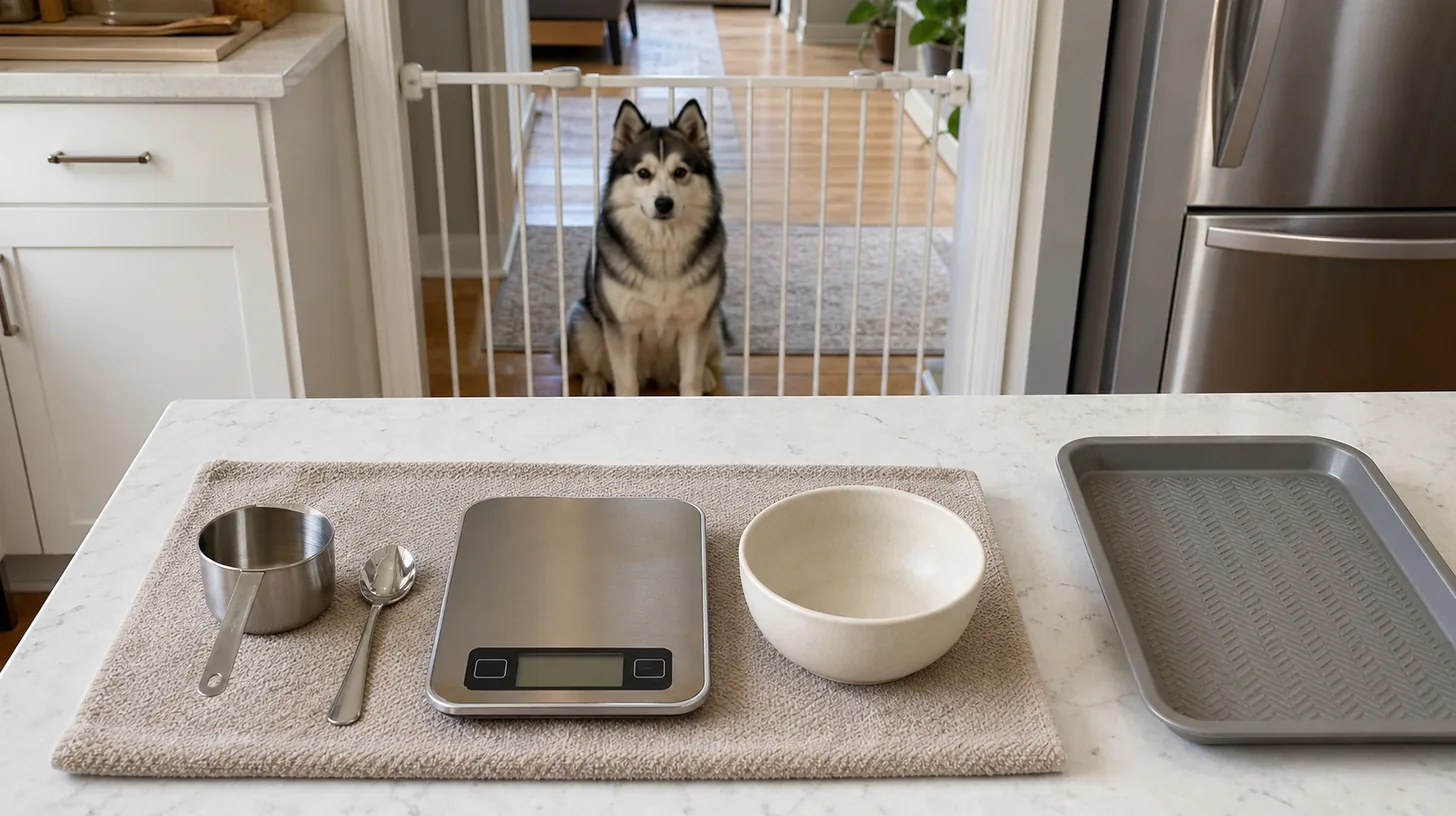
Direct answer: Before preparing a Pomsky meal, match the current food label or veterinary plan with the assigned measuring and serving utensils. Do not rely on an unmarked scoop or assume another caregiver already measured a portion. After use, move utensils to a used-only area, follow their material and dishwasher directions, rinse away residue and dry every surface before closed storage. Inspect handles, markings, seams and edges; a cracked or unreadable measuring tool should be held out of service. Return each clean utensil to its assigned container and record the meal, tool status, missing items and any measurement exception. The next caregiver should confirm the handoff rather than silently estimating or compensating.
Meal utensils are small, but they connect the food source, measured amount and caregiver record. An anonymous scoop, damp measuring cup or utensil returned to the wrong container can break that chain. This page owns the utensil's complete state change from verified clean assignment through preparation, used-zone separation, washing, drying, inspection and handoff. Bowl maintenance and measuring-tool accuracy remain separate tasks.
Confirm the Current Food Source
Match the package or veterinary plan, life stage, product identity and household record before opening storage.
Keep the sequence repeatable across caregivers. Say what is being checked, complete it, and return equipment and people to neutral before continuing. In this page's context, success means the correct food prepared with identified intact utensils that are washed, fully dried, returned to assigned storage and reconciled in the caregiver record; it does not mean proving that a known risk can be tolerated. In this routine, step 1 is the confirm the current food source decision.
If the Pomsky cannot remain comfortable or the equipment and environment cannot remain controlled, end the attempt. Do not proceed through wrong food, wrong utensil, unmarked volume, duplicate preparation, residue, retained moisture, cracked edge, lost markings, mixed clean and used tools or silent exception. Capture food identity, source instruction, utensil identity, measurement, meal time, used zone, wash method, rinse, dry status, damage, storage, exception and caregiver confirmation before deciding what changes next. Record the result of confirm the current food source before continuing.
Select the Assigned Utensils
Use the named scale, cup, spoon or serving tool and hold aside any anonymous, damaged or unreadable item.
Treat this as one part of the complete routine, not an isolated trick. The surrounding setup is a dog-free meal-prep surface with current food source, feeding instruction, assigned utensils, clean and used zones, washing area and handoff record. A clean transition reduces ambiguity and makes it easier to notice when the dog, equipment, environment, or records differ from the previous attempt. In this routine, step 2 is the select the assigned utensils decision.
Do not convert this step into a stress test. The principal avoidable risks are wrong food, wrong utensil, unmarked volume, duplicate preparation, residue, retained moisture, cracked edge, lost markings, mixed clean and used tools or silent exception. Write down food identity, source instruction, utensil identity, measurement, meal time, used zone, wash method, rinse, dry status, damage, storage, exception and caregiver confirmation; a short factual note is more useful than a reassuring guess. Record the result of select the assigned utensils before continuing.
Verify Measurement Directions
Apply the current unit, tare and portion instruction without converting by memory or substituting a different scoop.
Pause long enough to inspect the result rather than assuming the action worked. Look at the dog, the physical boundary, and the next movement available to the caregiver. Continue only when the arrangement still supports the correct food prepared with identified intact utensils that are washed, fully dried, returned to assigned storage and reconciled in the caregiver record. In this routine, step 3 is the verify measurement directions decision.
Stop when the expected condition is absent or the situation begins to depend on force, luck, or an open boundary. Specifically avoid wrong food, wrong utensil, unmarked volume, duplicate preparation, residue, retained moisture, cracked edge, lost markings, mixed clean and used tools or silent exception. The follow-up record should cover food identity, source instruction, utensil identity, measurement, meal time, used zone, wash method, rinse, dry status, damage, storage, exception and caregiver confirmation. Record the result of verify measurement directions before continuing.
Keep the Pomsky Out of Prep
Prevent access to packages, utensils, spills, counters and bins until the meal station is ready.
A second capable adult can verify the boundary during early practice or higher-risk situations. That person should follow the same sequence and avoid adding prompts, handling, or access that changes the task. The shared standard remains the correct food prepared with identified intact utensils that are washed, fully dried, returned to assigned storage and reconciled in the caregiver record. In this routine, step 4 is the keep the pomsky out of prep decision.
The absence of an incident is not proof that the arrangement is sound. Recheck for wrong food, wrong utensil, unmarked volume, duplicate preparation, residue, retained moisture, cracked edge, lost markings, mixed clean and used tools or silent exception. Document food identity, source instruction, utensil identity, measurement, meal time, used zone, wash method, rinse, dry status, damage, storage, exception and caregiver confirmation so a later caregiver can distinguish a passed step from one that was skipped. Record the result of keep the pomsky out of prep before continuing.
Record Preparation Once
Mark the food, amount, time and caregiver so another person does not repeat or silently modify the meal.
Perform this check before adding the next variable. The target remains the correct food prepared with identified intact utensils that are washed, fully dried, returned to assigned storage and reconciled in the caregiver record. Work in a dog-free meal-prep surface with current food source, feeding instruction, assigned utensils, clean and used zones, washing area and handoff record. If the setup cannot preserve that condition, simplify it or stop rather than relying on speed or physical control. In this routine, step 5 is the record preparation once decision.
If the Pomsky cannot remain comfortable or the equipment and environment cannot remain controlled, end the attempt. Do not proceed through wrong food, wrong utensil, unmarked volume, duplicate preparation, residue, retained moisture, cracked edge, lost markings, mixed clean and used tools or silent exception. Capture food identity, source instruction, utensil identity, measurement, meal time, used zone, wash method, rinse, dry status, damage, storage, exception and caregiver confirmation before deciding what changes next. Record the result of record preparation once before continuing.
Move Used Tools to One Zone
Keep residue-bearing utensils away from clean storage, human food tools and the next pet's supplies.
Use an observable pass condition: the relevant item is checked, the boundary is closed, and the Pomsky can remain safe without being used as a test. This protects the main objective, the correct food prepared with identified intact utensils that are washed, fully dried, returned to assigned storage and reconciled in the caregiver record, while leaving a clear point at which the caregiver can step back. In this routine, step 6 is the move used tools to one zone decision.
Do not convert this step into a stress test. The principal avoidable risks are wrong food, wrong utensil, unmarked volume, duplicate preparation, residue, retained moisture, cracked edge, lost markings, mixed clean and used tools or silent exception. Write down food identity, source instruction, utensil identity, measurement, meal time, used zone, wash method, rinse, dry status, damage, storage, exception and caregiver confirmation; a short factual note is more useful than a reassuring guess. Record the result of move used tools to one zone before continuing.
Wash Under Material Directions
Use only the permitted water, cleaner, dishwasher placement and disassembly process for each tool.
Keep the sequence repeatable across caregivers. Say what is being checked, complete it, and return equipment and people to neutral before continuing. In this page's context, success means the correct food prepared with identified intact utensils that are washed, fully dried, returned to assigned storage and reconciled in the caregiver record; it does not mean proving that a known risk can be tolerated. In this routine, step 7 is the wash under material directions decision.
Stop when the expected condition is absent or the situation begins to depend on force, luck, or an open boundary. Specifically avoid wrong food, wrong utensil, unmarked volume, duplicate preparation, residue, retained moisture, cracked edge, lost markings, mixed clean and used tools or silent exception. The follow-up record should cover food identity, source instruction, utensil identity, measurement, meal time, used zone, wash method, rinse, dry status, damage, storage, exception and caregiver confirmation. Record the result of wash under material directions before continuing.
Rinse Dry and Inspect
Check markings, seams, handles, edges, odor, residue and retained moisture before declaring the utensil clean.
Treat this as one part of the complete routine, not an isolated trick. The surrounding setup is a dog-free meal-prep surface with current food source, feeding instruction, assigned utensils, clean and used zones, washing area and handoff record. A clean transition reduces ambiguity and makes it easier to notice when the dog, equipment, environment, or records differ from the previous attempt. In this routine, step 8 is the rinse dry and inspect decision.
The absence of an incident is not proof that the arrangement is sound. Recheck for wrong food, wrong utensil, unmarked volume, duplicate preparation, residue, retained moisture, cracked edge, lost markings, mixed clean and used tools or silent exception. Document food identity, source instruction, utensil identity, measurement, meal time, used zone, wash method, rinse, dry status, damage, storage, exception and caregiver confirmation so a later caregiver can distinguish a passed step from one that was skipped. Record the result of rinse dry and inspect before continuing.
Return to Assigned Storage
Keep dry tools with the correct food system in a closed location protected from pests and animal access.
Pause long enough to inspect the result rather than assuming the action worked. Look at the dog, the physical boundary, and the next movement available to the caregiver. Continue only when the arrangement still supports the correct food prepared with identified intact utensils that are washed, fully dried, returned to assigned storage and reconciled in the caregiver record. In this routine, step 9 is the return to assigned storage decision.
If the Pomsky cannot remain comfortable or the equipment and environment cannot remain controlled, end the attempt. Do not proceed through wrong food, wrong utensil, unmarked volume, duplicate preparation, residue, retained moisture, cracked edge, lost markings, mixed clean and used tools or silent exception. Capture food identity, source instruction, utensil identity, measurement, meal time, used zone, wash method, rinse, dry status, damage, storage, exception and caregiver confirmation before deciding what changes next. Record the result of return to assigned storage before continuing.
Acknowledge Exceptions at Handoff
Record missing tools, uncertain amounts, spills, damage or cleaning failure and route the decision instead of guessing.
A second capable adult can verify the boundary during early practice or higher-risk situations. That person should follow the same sequence and avoid adding prompts, handling, or access that changes the task. The shared standard remains the correct food prepared with identified intact utensils that are washed, fully dried, returned to assigned storage and reconciled in the caregiver record. In this routine, step 10 is the acknowledge exceptions at handoff decision.
Do not convert this step into a stress test. The principal avoidable risks are wrong food, wrong utensil, unmarked volume, duplicate preparation, residue, retained moisture, cracked edge, lost markings, mixed clean and used tools or silent exception. Write down food identity, source instruction, utensil identity, measurement, meal time, used zone, wash method, rinse, dry status, damage, storage, exception and caregiver confirmation; a short factual note is more useful than a reassuring guess. Record the result of acknowledge exceptions at handoff before continuing.
When to Stop and Escalate
Stop when the Pomsky, caregiver, equipment, records, or environment no longer supports the correct food prepared with identified intact utensils that are washed, fully dried, returned to assigned storage and reconciled in the caregiver record. Do not improvise through wrong food, wrong utensil, unmarked volume, duplicate preparation, residue, retained moisture, cracked edge, lost markings, mixed clean and used tools or silent exception. Seek the veterinary team for diet, appetite, intake or health concerns and the food or utensil manufacturer for label, storage, measuring or cleaning questions. Bring the factual observations already collected rather than recreating the event.
Before another attempt, review food identity, source instruction, utensil identity, measurement, meal time, used zone, wash method, rinse, dry status, damage, storage, exception and caregiver confirmation. Resume only after the responsible person, physical setup, and controlling instructions are clear. A stop is part of the protocol: it preserves useful evidence and prevents uncertainty from becoming exposure.
Keep the Routine Current
Recheck the complete setup whenever the dog, household, product, instructions, environment, or purpose changes. The intended outcome remains the correct food prepared with identified intact utensils that are washed, fully dried, returned to assigned storage and reconciled in the caregiver record, not a perfect-looking performance. Use the newest primary instruction, retain dated records, and retire superseded assumptions so every caregiver begins from the same current plan.
Sources reviewed
Each source is used only for the claim scopes listed below. None establishes a guaranteed Pomsky outcome or replaces individual professional assessment.
- World Small Animal Veterinary Association: Global Nutrition Guidelines - Supports: nutrition assessment; body condition; individual feeding review. Limit: Not a brand endorsement and not a fixed ration calculator.
- World Small Animal Veterinary Association: Selecting a Pet Food for Your Pet - Supports: manufacturer evaluation; food selection questions; quality-control review. Limit: Do not turn the questions into a universal approved-brand list.
- U.S. Food and Drug Administration: Animal Food Labeling and Pet Food Claims - Supports: pet food labels; regulated claims; ingredient and product statements. Limit: Do not infer food suitability from marketing language alone.