Written and reviewed by A Pomsky Editorial Team. Originally published 2026-07-26; substantively reviewed July 26, 2026.
Training boundary: Use humane, reward-based methods and protect safety with management. Pain, panic, aggression, a bite history, or serious handling risk requires a veterinarian or qualified behavior professional. Read the editorial policy.
Direct answer: Keep the Pomsky out while decorations are installed or removed. Secure cords, batteries, hooks, ribbons, plants, food, flames, breakables and tree water beyond access, remove climb aids and inspect the floor after every gathering. Use closed gift and waste storage, recheck damaged displays daily, and contact a veterinarian or poison service promptly after suspected ingestion or exposure.
Holiday decorations create temporary hazards that move as packages arrive, displays change, food appears, and guests leave waste behind. The Pomsky stays out during installation, repair, gatherings, and removal. The caregiver inventories electrical items, batteries, hooks, ribbons, plants, water, candles, breakables, food, gifts, and waste, then checks the setup from dog height every day rather than treating the first inspection as permanent.
Keep the Pomsky Out During Setup
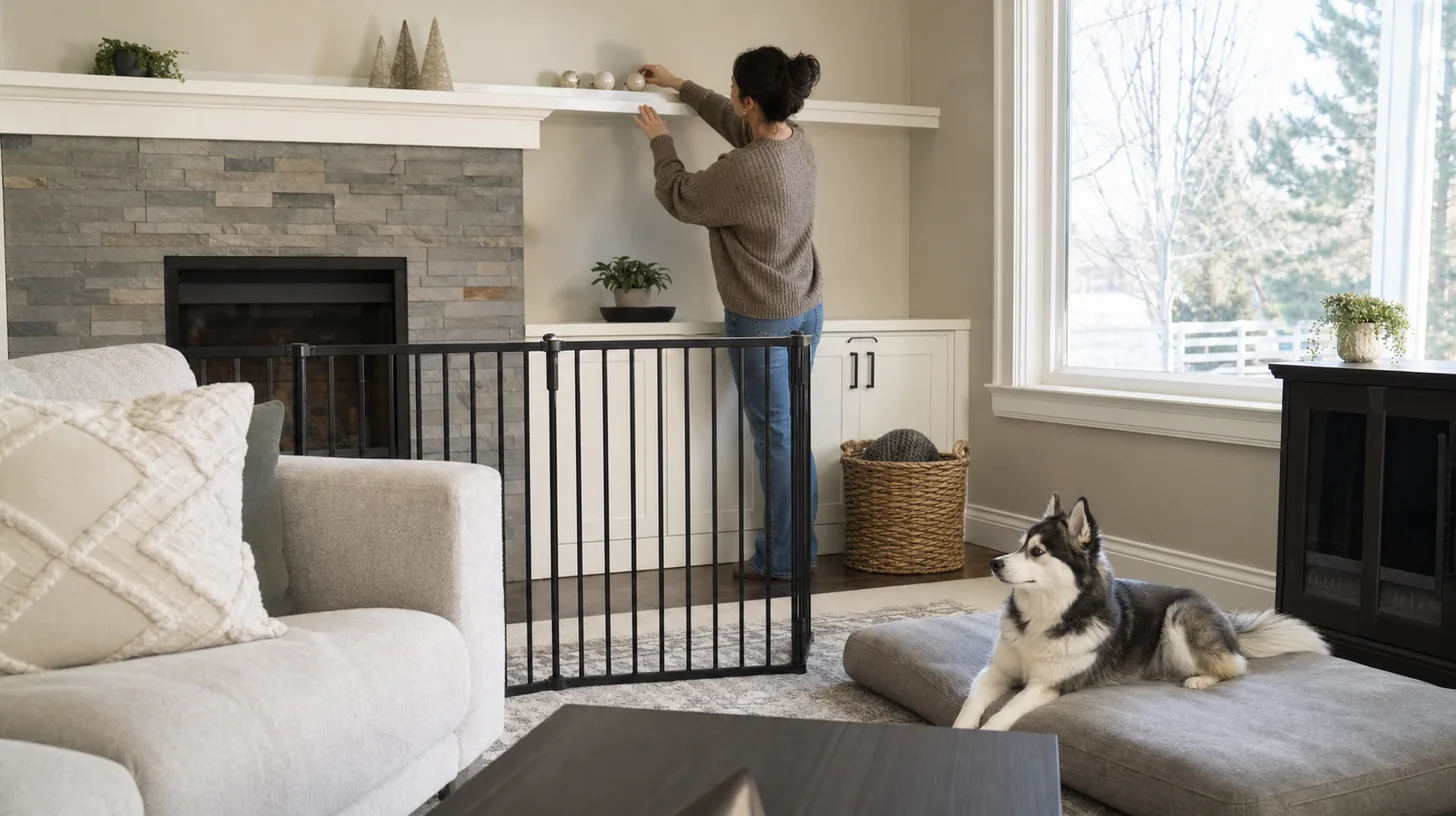
Close a reliable barrier before opening boxes, using ladders, moving furniture, connecting power, or placing small and breakable parts.
Use an observable pass condition: the relevant item is checked, the boundary is closed, and the Pomsky can remain safe without being used as a test. This protects the main objective, temporary decorations and gathering materials kept outside Pomsky access through installation, daily use, guest transitions, cleanup, and removal, while leaving a clear point at which the caregiver can step back. In this routine, step 1 is the keep the pomsky out during setup decision.
The absence of an incident is not proof that the arrangement is sound. Recheck for cord chewing, batteries, hooks, ribbon, tinsel, plants, tree water, candles, food, alcohol, gifts, glass, climbing, dropped pieces, waste, or delayed poison contact. Document display, location, anchor, cord, battery, hook, ribbon, plant, water, flame, food, gift, breakable, floor check, waste, damage, guest transition, and removal so a later caregiver can distinguish a passed step from one that was skipped. Record the result of keep the pomsky out during setup before continuing.
Inventory Cords Lights and Batteries
Count plugs, adapters, extension leads, battery compartments, loose cells, remotes, switches, and damaged insulation before placement.
Keep the sequence repeatable across caregivers. Say what is being checked, complete it, and return equipment and people to neutral before continuing. In this page's context, success means temporary decorations and gathering materials kept outside Pomsky access through installation, daily use, guest transitions, cleanup, and removal; it does not mean proving that a known risk can be tolerated. In this routine, step 2 is the inventory cords lights and batteries decision.
If the Pomsky cannot remain comfortable or the equipment and environment cannot remain controlled, end the attempt. Do not proceed through cord chewing, batteries, hooks, ribbon, tinsel, plants, tree water, candles, food, alcohol, gifts, glass, climbing, dropped pieces, waste, or delayed poison contact. Capture display, location, anchor, cord, battery, hook, ribbon, plant, water, flame, food, gift, breakable, floor check, waste, damage, guest transition, and removal before deciding what changes next. Record the result of inventory cords lights and batteries before continuing.
Control Hooks Ribbon and Hanging Material
Secure or remove metal hooks, tinsel, string, garland, bows, tape, wire, ornament caps, and dangling pieces from every access route.
Treat this as one part of the complete routine, not an isolated trick. The surrounding setup is a gated dog-free decorating area with closed storage, anchored displays, controlled cords, no accessible flame or food, lidded waste, and a clear dog route. A clean transition reduces ambiguity and makes it easier to notice when the dog, equipment, environment, or records differ from the previous attempt. In this routine, step 3 is the control hooks ribbon and hanging material decision.
Do not convert this step into a stress test. The principal avoidable risks are cord chewing, batteries, hooks, ribbon, tinsel, plants, tree water, candles, food, alcohol, gifts, glass, climbing, dropped pieces, waste, or delayed poison contact. Write down display, location, anchor, cord, battery, hook, ribbon, plant, water, flame, food, gift, breakable, floor check, waste, damage, guest transition, and removal; a short factual note is more useful than a reassuring guess. Record the result of control hooks ribbon and hanging material before continuing.
Review Plants Food and Fragrance
Identify each plant, edible display, drink, fragrance, oil, candle, and gift content without relying on seasonal or pet-friendly marketing.
Pause long enough to inspect the result rather than assuming the action worked. Look at the dog, the physical boundary, and the next movement available to the caregiver. Continue only when the arrangement still supports temporary decorations and gathering materials kept outside Pomsky access through installation, daily use, guest transitions, cleanup, and removal. In this routine, step 4 is the review plants food and fragrance decision.
Stop when the expected condition is absent or the situation begins to depend on force, luck, or an open boundary. Specifically avoid cord chewing, batteries, hooks, ribbon, tinsel, plants, tree water, candles, food, alcohol, gifts, glass, climbing, dropped pieces, waste, or delayed poison contact. The follow-up record should cover display, location, anchor, cord, battery, hook, ribbon, plant, water, flame, food, gift, breakable, floor check, waste, damage, guest transition, and removal. Record the result of review plants food and fragrance before continuing.
Anchor Trees and Freestanding Displays
Check bases, water reservoirs, climb aids, branches, shelves, cords, falling paths, and barriers from the Pomsky's standing and jumping height.
A second capable adult can verify the boundary during early practice or higher-risk situations. That person should follow the same sequence and avoid adding prompts, handling, or access that changes the task. The shared standard remains temporary decorations and gathering materials kept outside Pomsky access through installation, daily use, guest transitions, cleanup, and removal. In this routine, step 5 is the anchor trees and freestanding displays decision.
The absence of an incident is not proof that the arrangement is sound. Recheck for cord chewing, batteries, hooks, ribbon, tinsel, plants, tree water, candles, food, alcohol, gifts, glass, climbing, dropped pieces, waste, or delayed poison contact. Document display, location, anchor, cord, battery, hook, ribbon, plant, water, flame, food, gift, breakable, floor check, waste, damage, guest transition, and removal so a later caregiver can distinguish a passed step from one that was skipped. Record the result of anchor trees and freestanding displays before continuing.
Remove Flame and Heat Access
Exclude the dog from candles, fireplaces, heaters, hot serving equipment, wax, matches, lighters, and recently extinguished surfaces.
Perform this check before adding the next variable. The target remains temporary decorations and gathering materials kept outside Pomsky access through installation, daily use, guest transitions, cleanup, and removal. Work in a gated dog-free decorating area with closed storage, anchored displays, controlled cords, no accessible flame or food, lidded waste, and a clear dog route. If the setup cannot preserve that condition, simplify it or stop rather than relying on speed or physical control. In this routine, step 6 is the remove flame and heat access decision.
If the Pomsky cannot remain comfortable or the equipment and environment cannot remain controlled, end the attempt. Do not proceed through cord chewing, batteries, hooks, ribbon, tinsel, plants, tree water, candles, food, alcohol, gifts, glass, climbing, dropped pieces, waste, or delayed poison contact. Capture display, location, anchor, cord, battery, hook, ribbon, plant, water, flame, food, gift, breakable, floor check, waste, damage, guest transition, and removal before deciding what changes next. Record the result of remove flame and heat access before continuing.
Create a Controlled Gift Zone
Keep food, medication, batteries, cosmetics, small toys, ribbon, bags, silica packets, and unknown contents closed until supervised opening.
Use an observable pass condition: the relevant item is checked, the boundary is closed, and the Pomsky can remain safe without being used as a test. This protects the main objective, temporary decorations and gathering materials kept outside Pomsky access through installation, daily use, guest transitions, cleanup, and removal, while leaving a clear point at which the caregiver can step back. In this routine, step 7 is the create a controlled gift zone decision.
Do not convert this step into a stress test. The principal avoidable risks are cord chewing, batteries, hooks, ribbon, tinsel, plants, tree water, candles, food, alcohol, gifts, glass, climbing, dropped pieces, waste, or delayed poison contact. Write down display, location, anchor, cord, battery, hook, ribbon, plant, water, flame, food, gift, breakable, floor check, waste, damage, guest transition, and removal; a short factual note is more useful than a reassuring guess. Record the result of create a controlled gift zone before continuing.
Manage Guests and Gathering Waste
Assign doors, food, cups, dropped items, coats, medication, purses, children's objects, and closed waste to specific adults.
Keep the sequence repeatable across caregivers. Say what is being checked, complete it, and return equipment and people to neutral before continuing. In this page's context, success means temporary decorations and gathering materials kept outside Pomsky access through installation, daily use, guest transitions, cleanup, and removal; it does not mean proving that a known risk can be tolerated. In this routine, step 8 is the manage guests and gathering waste decision.
Stop when the expected condition is absent or the situation begins to depend on force, luck, or an open boundary. Specifically avoid cord chewing, batteries, hooks, ribbon, tinsel, plants, tree water, candles, food, alcohol, gifts, glass, climbing, dropped pieces, waste, or delayed poison contact. The follow-up record should cover display, location, anchor, cord, battery, hook, ribbon, plant, water, flame, food, gift, breakable, floor check, waste, damage, guest transition, and removal. Record the result of manage guests and gathering waste before continuing.
Perform a Daily Floor-Level Check
Inspect under furniture and displays for broken pieces, water, residue, dropped fasteners, chewed material, shifted barriers, and overheating.
Treat this as one part of the complete routine, not an isolated trick. The surrounding setup is a gated dog-free decorating area with closed storage, anchored displays, controlled cords, no accessible flame or food, lidded waste, and a clear dog route. A clean transition reduces ambiguity and makes it easier to notice when the dog, equipment, environment, or records differ from the previous attempt. In this routine, step 9 is the perform a daily floor-level check decision.
The absence of an incident is not proof that the arrangement is sound. Recheck for cord chewing, batteries, hooks, ribbon, tinsel, plants, tree water, candles, food, alcohol, gifts, glass, climbing, dropped pieces, waste, or delayed poison contact. Document display, location, anchor, cord, battery, hook, ribbon, plant, water, flame, food, gift, breakable, floor check, waste, damage, guest transition, and removal so a later caregiver can distinguish a passed step from one that was skipped. Record the result of perform a daily floor-level check before continuing.
Remove Decorations With the Same Controls
Count components, close waste, inspect storage boxes and floors, restore furniture safely, and reopen access only after the room is cleared.
Pause long enough to inspect the result rather than assuming the action worked. Look at the dog, the physical boundary, and the next movement available to the caregiver. Continue only when the arrangement still supports temporary decorations and gathering materials kept outside Pomsky access through installation, daily use, guest transitions, cleanup, and removal. In this routine, step 10 is the remove decorations with the same controls decision.
If the Pomsky cannot remain comfortable or the equipment and environment cannot remain controlled, end the attempt. Do not proceed through cord chewing, batteries, hooks, ribbon, tinsel, plants, tree water, candles, food, alcohol, gifts, glass, climbing, dropped pieces, waste, or delayed poison contact. Capture display, location, anchor, cord, battery, hook, ribbon, plant, water, flame, food, gift, breakable, floor check, waste, damage, guest transition, and removal before deciding what changes next. Record the result of remove decorations with the same controls before continuing.
When to Stop and Escalate
Stop when the Pomsky, caregiver, equipment, records, or environment no longer supports temporary decorations and gathering materials kept outside Pomsky access through installation, daily use, guest transitions, cleanup, and removal. Do not improvise through cord chewing, batteries, hooks, ribbon, tinsel, plants, tree water, candles, food, alcohol, gifts, glass, climbing, dropped pieces, waste, or delayed poison contact. Seek a veterinarian or animal poison service promptly after suspected ingestion or exposure, emergency services for fire or electrical danger, and product guidance for damaged equipment. Bring the factual observations already collected rather than recreating the event.
Before another attempt, review display, location, anchor, cord, battery, hook, ribbon, plant, water, flame, food, gift, breakable, floor check, waste, damage, guest transition, and removal. Resume only after the responsible person, physical setup, and controlling instructions are clear. A stop is part of the protocol: it preserves useful evidence and prevents uncertainty from becoming exposure.
Keep the Routine Current
Recheck the complete setup whenever the dog, household, product, instructions, environment, or purpose changes. The intended outcome remains temporary decorations and gathering materials kept outside Pomsky access through installation, daily use, guest transitions, cleanup, and removal, not a perfect-looking performance. Use the newest primary instruction, retain dated records, and retire superseded assumptions so every caregiver begins from the same current plan.
Sources reviewed
Each source is used only for the claim scopes listed below. None establishes a guaranteed Pomsky outcome or replaces individual professional assessment.
- U.S. Centers for Disease Control and Prevention: Dogs: Healthy Pets, Healthy People - Supports: supervision around young children; bite prevention; household hygiene and routine veterinary care. Limit: General prevention guidance does not assess an individual dog's behavior or replace pediatric, veterinary, or qualified behavior advice.
- ASPCA: Animal Poison Control - Supports: poison emergency routing; information to collect after exposure. Limit: Never replace urgent veterinary or poison-control instructions with article advice.
- American Animal Hospital Association: Lifestyle and Safety Assessment - Supports: appropriate confinement; leash, collar and harness planning; lifestyle-specific safety review. Limit: Equipment selection must account for the individual dog's anatomy, behavior, health, and environment.