Written and reviewed by A Pomsky Editorial Team. Originally published 2026-07-26; substantively reviewed July 26, 2026.
Training boundary: Use humane, reward-based methods and protect safety with management. Pain, panic, aggression, a bite history, or serious handling risk requires a veterinarian or qualified behavior professional. Read the editorial policy.
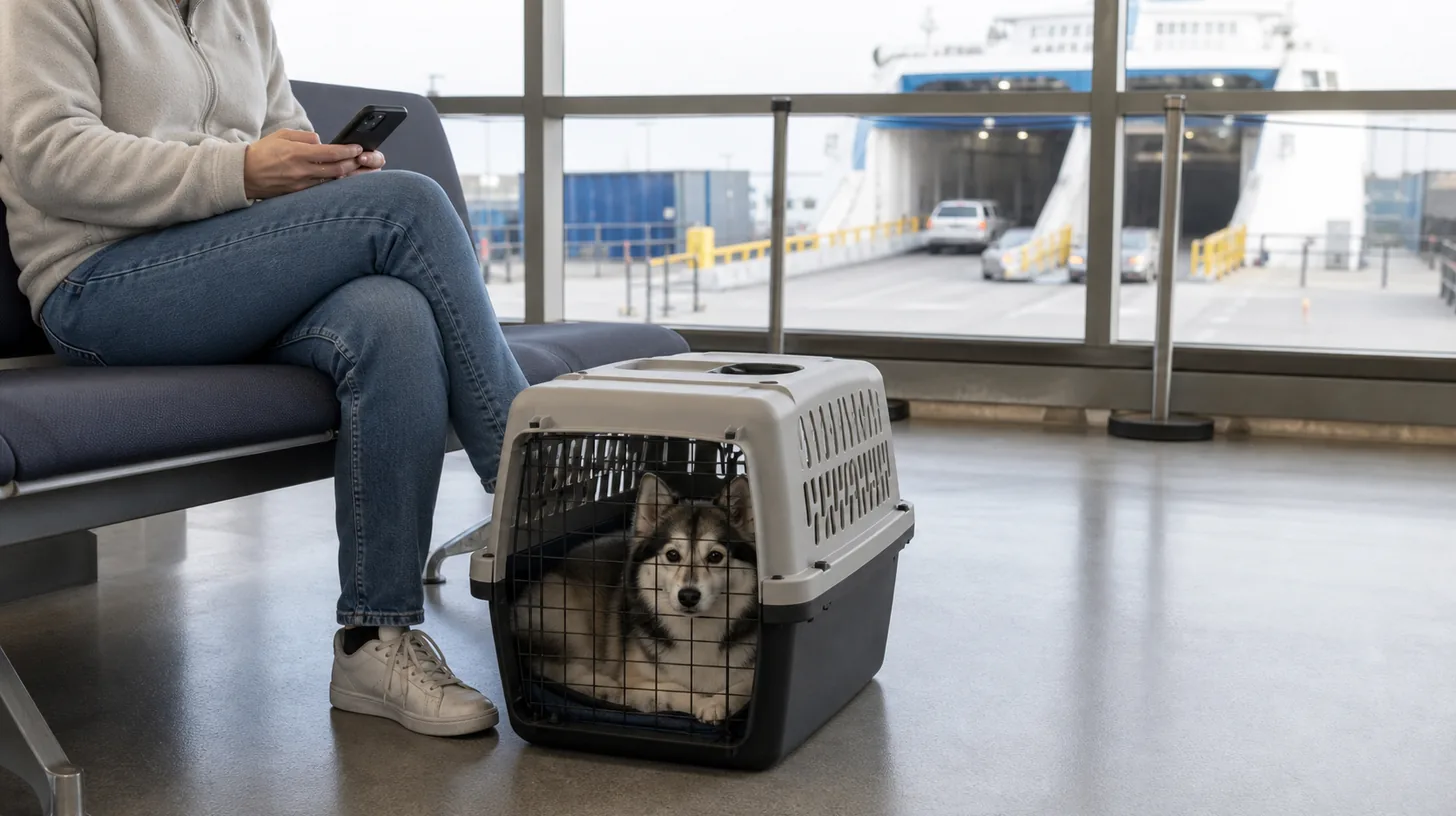
Direct answer: Check the ferry operator's current pet, carrier, vehicle-deck and passenger-area rules for the exact sailing before booking. Inspect the required carrier or fitted restraint, assign dog and vehicle roles, and use counted transitions through the terminal, ramp and vessel. Keep the Pomsky away from traffic, machinery and open edges, monitor weather and recovery, and follow staff directions during disembarkation.
Ferry travel varies by operator, route, vessel, terminal, vehicle deck, passenger space, weather, and local rule. A pet-friendly label does not define where a Pomsky may wait, whether a carrier is required, or whether passengers can remain with vehicles. Verify current official instructions before booking, choose the required secure equipment, plan every terminal and ramp transition, and keep an alternate route when conditions or rules change.
Verify the Exact Sailing Rules
Confirm booking, pet limits, carrier or leash requirements, vehicle-deck access, passenger areas, cabins, relief, documentation, fees, check-in, and emergency instructions through the operator.
Use an observable pass condition: the relevant item is checked, the boundary is closed, and the Pomsky can remain safe without being used as a test. This protects the main objective, a rule-compliant ferry journey with the Pomsky secured through terminal, boarding, vessel, vehicle-deck, passenger-area, relief, and disembarkation transitions, while leaving a clear point at which the caregiver can step back. In this routine, step 1 is the verify the exact sailing rules decision.
The absence of an incident is not proof that the arrangement is sound. Recheck for outdated rule, missed reservation, loose dog, ramp edge, vehicle traffic, machinery, hot or cold vehicle deck, exhaust, crowd, loud horn, wet surface, inaccessible relief area, seasickness, or failed handoff. Document operator, route, sailing, rule version, reservation, terminal, carrier or restraint, vehicle status, pet area, deck access, weather, caregiver, boarding count, relief, and disembark count so a later caregiver can distinguish a passed step from one that was skipped. Record the result of verify the exact sailing rules before continuing.
Choose Equipment for the Required Mode
Use a correctly sized secure carrier or current fitted restraint that meets the operator's rule, then inspect doors, clips, ventilation, identification, and carrying method.
Keep the sequence repeatable across caregivers. Say what is being checked, complete it, and return equipment and people to neutral before continuing. In this page's context, success means a rule-compliant ferry journey with the Pomsky secured through terminal, boarding, vessel, vehicle-deck, passenger-area, relief, and disembarkation transitions; it does not mean proving that a known risk can be tolerated. In this routine, step 2 is the choose equipment for the required mode decision.
If the Pomsky cannot remain comfortable or the equipment and environment cannot remain controlled, end the attempt. Do not proceed through outdated rule, missed reservation, loose dog, ramp edge, vehicle traffic, machinery, hot or cold vehicle deck, exhaust, crowd, loud horn, wet surface, inaccessible relief area, seasickness, or failed handoff. Capture operator, route, sailing, rule version, reservation, terminal, carrier or restraint, vehicle status, pet area, deck access, weather, caregiver, boarding count, relief, and disembark count before deciding what changes next. Record the result of choose equipment for the required mode before continuing.
Plan Terminal Arrival and Waiting
Identify traffic, curb, queue, ticketing, elevators, stairs, other animals, waiting zones, toilets, security, and the point where the dog must enter a carrier.
Treat this as one part of the complete routine, not an isolated trick. The surrounding setup is a planned ferry route with current operator instructions, confirmed pet space, fitted restraint or carrier, identification, water, waste supplies, weather plan, assigned caregivers, and alternatives. A clean transition reduces ambiguity and makes it easier to notice when the dog, equipment, environment, or records differ from the previous attempt. In this routine, step 3 is the plan terminal arrival and waiting decision.
Do not convert this step into a stress test. The principal avoidable risks are outdated rule, missed reservation, loose dog, ramp edge, vehicle traffic, machinery, hot or cold vehicle deck, exhaust, crowd, loud horn, wet surface, inaccessible relief area, seasickness, or failed handoff. Write down operator, route, sailing, rule version, reservation, terminal, carrier or restraint, vehicle status, pet area, deck access, weather, caregiver, boarding count, relief, and disembark count; a short factual note is more useful than a reassuring guess. Record the result of plan terminal arrival and waiting before continuing.
Assign Caregiver and Vehicle Roles
Name who controls the Pomsky, who drives, who handles tickets, who carries supplies, and who confirms each transition before doors, ramps, or vehicle lanes change.
Pause long enough to inspect the result rather than assuming the action worked. Look at the dog, the physical boundary, and the next movement available to the caregiver. Continue only when the arrangement still supports a rule-compliant ferry journey with the Pomsky secured through terminal, boarding, vessel, vehicle-deck, passenger-area, relief, and disembarkation transitions. In this routine, step 4 is the assign caregiver and vehicle roles decision.
Stop when the expected condition is absent or the situation begins to depend on force, luck, or an open boundary. Specifically avoid outdated rule, missed reservation, loose dog, ramp edge, vehicle traffic, machinery, hot or cold vehicle deck, exhaust, crowd, loud horn, wet surface, inaccessible relief area, seasickness, or failed handoff. The follow-up record should cover operator, route, sailing, rule version, reservation, terminal, carrier or restraint, vehicle status, pet area, deck access, weather, caregiver, boarding count, relief, and disembark count. Record the result of assign caregiver and vehicle roles before continuing.
Use a Counted Boarding Sequence
Secure the dog before leaving the vehicle or waiting area, follow staff directions, maintain distance from edges and machinery, and account for equipment after each movement.
A second capable adult can verify the boundary during early practice or higher-risk situations. That person should follow the same sequence and avoid adding prompts, handling, or access that changes the task. The shared standard remains a rule-compliant ferry journey with the Pomsky secured through terminal, boarding, vessel, vehicle-deck, passenger-area, relief, and disembarkation transitions. In this routine, step 5 is the use a counted boarding sequence decision.
The absence of an incident is not proof that the arrangement is sound. Recheck for outdated rule, missed reservation, loose dog, ramp edge, vehicle traffic, machinery, hot or cold vehicle deck, exhaust, crowd, loud horn, wet surface, inaccessible relief area, seasickness, or failed handoff. Document operator, route, sailing, rule version, reservation, terminal, carrier or restraint, vehicle status, pet area, deck access, weather, caregiver, boarding count, relief, and disembark count so a later caregiver can distinguish a passed step from one that was skipped. Record the result of use a counted boarding sequence before continuing.
Follow Vehicle-Deck Restrictions
Obey rules about remaining in vehicles, engine status, windows, alarms, access times, temperature, ventilation, and passenger return rather than improvising on the deck.
Perform this check before adding the next variable. The target remains a rule-compliant ferry journey with the Pomsky secured through terminal, boarding, vessel, vehicle-deck, passenger-area, relief, and disembarkation transitions. Work in a planned ferry route with current operator instructions, confirmed pet space, fitted restraint or carrier, identification, water, waste supplies, weather plan, assigned caregivers, and alternatives. If the setup cannot preserve that condition, simplify it or stop rather than relying on speed or physical control. In this routine, step 6 is the follow vehicle-deck restrictions decision.
If the Pomsky cannot remain comfortable or the equipment and environment cannot remain controlled, end the attempt. Do not proceed through outdated rule, missed reservation, loose dog, ramp edge, vehicle traffic, machinery, hot or cold vehicle deck, exhaust, crowd, loud horn, wet surface, inaccessible relief area, seasickness, or failed handoff. Capture operator, route, sailing, rule version, reservation, terminal, carrier or restraint, vehicle status, pet area, deck access, weather, caregiver, boarding count, relief, and disembark count before deciding what changes next. Record the result of follow vehicle-deck restrictions before continuing.
Settle in the Permitted Pet Area
Choose the safest allowed position away from doors, stairs, food service, children, heavy traffic, and open edges while preserving ventilation and emergency egress.
Use an observable pass condition: the relevant item is checked, the boundary is closed, and the Pomsky can remain safe without being used as a test. This protects the main objective, a rule-compliant ferry journey with the Pomsky secured through terminal, boarding, vessel, vehicle-deck, passenger-area, relief, and disembarkation transitions, while leaving a clear point at which the caregiver can step back. In this routine, step 7 is the settle in the permitted pet area decision.
Do not convert this step into a stress test. The principal avoidable risks are outdated rule, missed reservation, loose dog, ramp edge, vehicle traffic, machinery, hot or cold vehicle deck, exhaust, crowd, loud horn, wet surface, inaccessible relief area, seasickness, or failed handoff. Write down operator, route, sailing, rule version, reservation, terminal, carrier or restraint, vehicle status, pet area, deck access, weather, caregiver, boarding count, relief, and disembark count; a short factual note is more useful than a reassuring guess. Record the result of settle in the permitted pet area before continuing.
Monitor Weather Motion and Recovery
Observe the Pomsky without diagnosing; respond to distress, vomiting, temperature concern, breathing change, collapse, or inability to recover through staff and veterinary guidance.
Keep the sequence repeatable across caregivers. Say what is being checked, complete it, and return equipment and people to neutral before continuing. In this page's context, success means a rule-compliant ferry journey with the Pomsky secured through terminal, boarding, vessel, vehicle-deck, passenger-area, relief, and disembarkation transitions; it does not mean proving that a known risk can be tolerated. In this routine, step 8 is the monitor weather motion and recovery decision.
Stop when the expected condition is absent or the situation begins to depend on force, luck, or an open boundary. Specifically avoid outdated rule, missed reservation, loose dog, ramp edge, vehicle traffic, machinery, hot or cold vehicle deck, exhaust, crowd, loud horn, wet surface, inaccessible relief area, seasickness, or failed handoff. The follow-up record should cover operator, route, sailing, rule version, reservation, terminal, carrier or restraint, vehicle status, pet area, deck access, weather, caregiver, boarding count, relief, and disembark count. Record the result of monitor weather motion and recovery before continuing.
Handle Relief and Waste Under Rules
Use only the designated route or area, keep containment connected before any opening, carry supplies, clean completely, and avoid contact with machinery, runoff, or other animals.
Treat this as one part of the complete routine, not an isolated trick. The surrounding setup is a planned ferry route with current operator instructions, confirmed pet space, fitted restraint or carrier, identification, water, waste supplies, weather plan, assigned caregivers, and alternatives. A clean transition reduces ambiguity and makes it easier to notice when the dog, equipment, environment, or records differ from the previous attempt. In this routine, step 9 is the handle relief and waste under rules decision.
The absence of an incident is not proof that the arrangement is sound. Recheck for outdated rule, missed reservation, loose dog, ramp edge, vehicle traffic, machinery, hot or cold vehicle deck, exhaust, crowd, loud horn, wet surface, inaccessible relief area, seasickness, or failed handoff. Document operator, route, sailing, rule version, reservation, terminal, carrier or restraint, vehicle status, pet area, deck access, weather, caregiver, boarding count, relief, and disembark count so a later caregiver can distinguish a passed step from one that was skipped. Record the result of handle relief and waste under rules before continuing.
Use a Deliberate Disembark Sequence
Wait for staff direction, secure all equipment, control vehicle and passenger movement, cross ramps without stopping, and complete a terminal or vehicle reset before normal access.
Pause long enough to inspect the result rather than assuming the action worked. Look at the dog, the physical boundary, and the next movement available to the caregiver. Continue only when the arrangement still supports a rule-compliant ferry journey with the Pomsky secured through terminal, boarding, vessel, vehicle-deck, passenger-area, relief, and disembarkation transitions. In this routine, step 10 is the use a deliberate disembark sequence decision.
If the Pomsky cannot remain comfortable or the equipment and environment cannot remain controlled, end the attempt. Do not proceed through outdated rule, missed reservation, loose dog, ramp edge, vehicle traffic, machinery, hot or cold vehicle deck, exhaust, crowd, loud horn, wet surface, inaccessible relief area, seasickness, or failed handoff. Capture operator, route, sailing, rule version, reservation, terminal, carrier or restraint, vehicle status, pet area, deck access, weather, caregiver, boarding count, relief, and disembark count before deciding what changes next. Record the result of use a deliberate disembark sequence before continuing.
When to Stop and Escalate
Stop when the Pomsky, caregiver, equipment, records, or environment no longer supports a rule-compliant ferry journey with the Pomsky secured through terminal, boarding, vessel, vehicle-deck, passenger-area, relief, and disembarkation transitions. Do not improvise through outdated rule, missed reservation, loose dog, ramp edge, vehicle traffic, machinery, hot or cold vehicle deck, exhaust, crowd, loud horn, wet surface, inaccessible relief area, seasickness, or failed handoff. Seek the ferry operator for current rules and vessel access, local emergency personnel for immediate danger, and the veterinary team for travel suitability, distress, motion sickness, or health concerns. Bring the factual observations already collected rather than recreating the event.
Before another attempt, review operator, route, sailing, rule version, reservation, terminal, carrier or restraint, vehicle status, pet area, deck access, weather, caregiver, boarding count, relief, and disembark count. Resume only after the responsible person, physical setup, and controlling instructions are clear. A stop is part of the protocol: it preserves useful evidence and prevents uncertainty from becoming exposure.
Keep the Routine Current
Recheck the complete setup whenever the dog, household, product, instructions, environment, or purpose changes. The intended outcome remains a rule-compliant ferry journey with the Pomsky secured through terminal, boarding, vessel, vehicle-deck, passenger-area, relief, and disembarkation transitions, not a perfect-looking performance. Use the newest primary instruction, retain dated records, and retire superseded assumptions so every caregiver begins from the same current plan.
Sources reviewed
Each source is used only for the claim scopes listed below. None establishes a guaranteed Pomsky outcome or replaces individual professional assessment.
- U.S. Centers for Disease Control and Prevention: Pet Emergency Checklist - Supports: emergency kit contents; records; identification; transport supplies. Limit: Adapt the checklist to local hazards and the dog's medical needs.
- American Animal Hospital Association: How Can I Discourage My Dog From Running Away? - Supports: secure fencing; leash use; recall foundations; escape-route checks; appropriate activity. Limit: No recall cue or fence design guarantees that an individual dog cannot escape.
- USDA Animal and Plant Health Inspection Service: Preparing Your Pet for Air Travel - Supports: carrier suitability; air-travel readiness; health and documentation planning. Limit: Airline, destination, and timing requirements vary; readers must verify current carrier and government rules for the exact trip.